Why KCMA-Certified Cabinets Matter in a Renovation

Learn why KCMA-certified cabinets matter in a renovation and how they help ensure quality, durability, and confidence. Read more today.
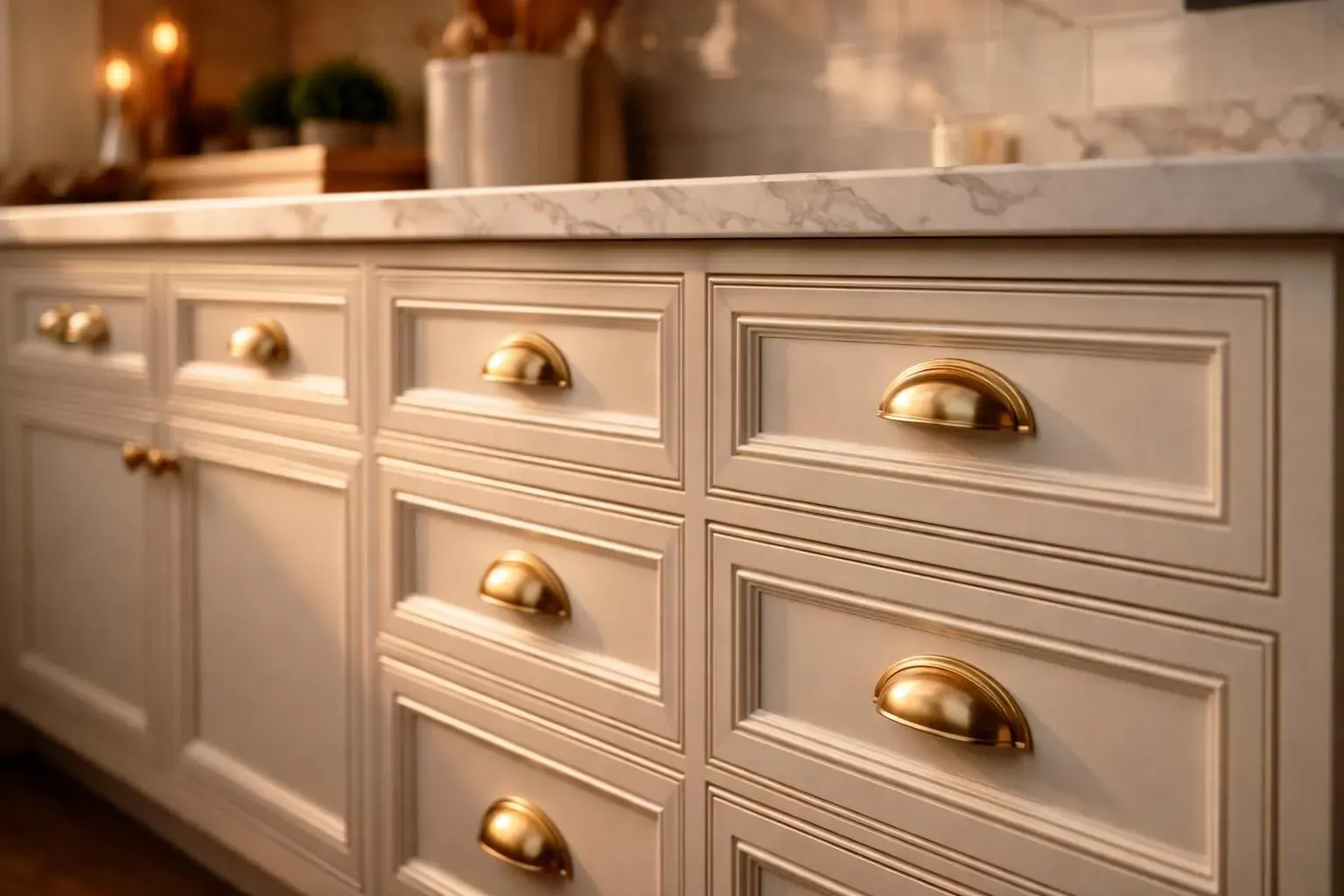
Cabinets do a lot of quiet work in a home. They carry weight, take daily abuse, hide clutter, frame the room, and in many projects they eat up a large share of the budget. That is why cabinet quality matters more than people think at the start of a home renovation.
If you are planning kitchen remodeling, a bathroom renovation, or built-in closet and storage solutions, you will face a crowded market. Some cabinetry looks great in a showroom and starts failing after a short time. Doors drift out of alignment. Drawer boxes loosen. Finishes wear badly around handles. Shelves sag. And then everyone involved, homeowner, designer, remodeler, installer, gets pulled into the same frustrating question: how did this get selected in the first place?
This is where KCMA certification earns its place.
The KCMA A161.1 Quality Certification Seal gives buyers a practical way to sort through claims and focus on cabinets that have been made to a recognized industry standard. It is not magic. It does not guarantee that every cabinet is right for every project. But it does something valuable, it replaces vague promises with verified requirements.
For professionals, that protects reputation. For homeowners, it reduces risk. For both, it makes specification decisions a lot less guessy.
What KCMA certification actually means
KCMA refers to the Kitchen Cabinet Manufacturers Association, a standards-setting body for the cabinet industry. Its A161.1 Quality Certification is widely used as a benchmark for cabinet construction and performance.
That seal matters because “quality” gets thrown around too easily. Nearly every cabinet line claims solid craftsmanship, premium materials, or superior cabinetry. Those phrases sound nice. They also tell you very little unless they tie back to testing and measurable requirements.
A KCMA-certified cabinet has been manufactured to established quality standards. In plain language, that means the cabinet line has been evaluated against specific criteria rather than judged only by appearance, price point, or sales language.
That distinction is bigger than it sounds.
A kitchen cabinet can look clean and expensive on day one and still be a poor choice. Good finishes can hide weak joinery. Smooth drawer action in a showroom does not always tell you how the hardware will hold up after years of use. Certification gives you a more reliable baseline.
Why that baseline matters in real renovation work
In a real project, cabinet failure is rarely just a cabinet problem.
For architects and kitchen and bath designers, bad cabinetry can throw off the visual balance of the entire room. Gaps become obvious. Misaligned doors ruin otherwise careful detailing. If the cabinet line was chosen for a luxury design concept with quartz counters, marble accents, and carefully proportioned lighting, low durability shows fast.
For remodelers and installers, poor cabinet quality creates schedule issues. A damaged replacement, a warped door, or missing consistency between units can slow installation and cause expensive callbacks.
For homeowners, the problem lands even harder. Cabinets are touched every day. You may forgive a small defect in a guest room. You probably will not forgive it in a kitchen where drawers open twenty times before dinner.
That is why many professionals treat certification as a trust signal. It does not replace judgment, but it narrows the field toward products that have already cleared a meaningful threshold.
Durability is where cheap cabinets get exposed
Cabinets live a repetitive life. Open, close, pull, load, wipe, repeat. Over and over. That routine sounds simple until you multiply it by years.
KCMA-certified cabinets go through repeated durability testing, with many tests run up to 25,000 cycles. That number matters because cabinet wear is cumulative. A hinge rarely announces failure on day three. It starts with small movement, then a subtle shift, then one door sits slightly proud of the next, then the homeowner notices it every single morning.
Durability testing is meant to check whether performance keeps pace with appearance. That is the heart of the issue. Most people want cabinetry that still feels solid after the excitement of the renovation wears off.
Think about the pressure points in a typical project:
Wall cabinet doors open and close constantly.
Deep drawers carry cookware, dishes, or pantry items.
A bathroom vanity deals with moisture, spills, and frequent cleaning.
Closet and storage solutions hold uneven loads that change with the season.
A cabinet that survives these conditions well is simply worth more than one that photographs nicely.
This matters in both affordable quality projects and high-end work. Spending more does not automatically buy better performance. There are expensive products that are mostly paying for style, finish options, or branding. Certification helps bring the conversation back to fundamentals, how the cabinet is expected to hold up once people actually live with it.
Certification helps separate style from substance
A lot of renovation decisions start with looks. That makes sense. People remodel because they want their homes to feel better and function better. Style is part of that.
The mistake is assuming that certification limits design choice. It does not.
KCMA-certified cabinetry exists across a wide range of aesthetics. You can find simple slab fronts, classic shaker profiles, inset-inspired looks, painted finishes, warm wood grains, and clean contemporary systems. You can specify a custom kitchen cabinet feel without giving up the reassurance that the product line meets recognized standards.
That is good news for designers who hate false tradeoffs. You should not have to choose between durability and design expression.
The same goes for material pairings. A kitchen cabinet has to work visually with the surrounding elements, countertop selection included. In some kitchens, that means bright quartz with minimal movement. In others, it means dramatic marble, veined surfaces, or a mixed-material palette that uses wood to soften stone. Certified cabinets fit into all of those directions because certification is about construction and performance, not dictating a certain look.
In bathroom renovation work, the same logic applies. A vanity may need to read sleek and modern, soft and traditional, or compact and practical. Certification does not fight that. It simply raises the floor on expected quality.
Reliability is not just about the cabinet box
There is another angle here that does not get enough attention, logistics.
The certification ecosystem includes North American manufacturers and suppliers, and that regional presence can help with support and delivery reliability. Anyone who has managed a renovation schedule knows how important that is.
A delayed cabinet order affects more than one line item. It can push templating for the countertop. It can delay plumbing hookups at the vanity. It can create storage problems on site. It can turn a carefully sequenced kitchen remodeling project into a week-by-week improvisation exercise.
Closer manufacturing and distribution do not erase delays entirely. Things still happen. But regional support often means better communication, faster problem solving, and shorter recovery time if a replacement part or corrected unit is needed.
For pros, that matters because deadlines are rarely generous. For homeowners, it matters because living through a renovation is tiring enough without open-ended cabinet uncertainty.
Risk management is the part nobody talks about until something goes wrong
Cabinet decisions are often framed as taste questions. Door style, color, hardware, finish sheen. Underneath all that, though, cabinet selection is also a risk management decision.
When you choose certified cabinetry, you are trying to reduce the odds of predictable problems. That is not glamorous, but it is smart.
Some risks are visible, like finish wear or poor door alignment. Others are more expensive because they ripple outward. If cabinets fail early, surrounding finishes can be affected. A poorly performing sink base cabinet, for example, can make moisture damage worse. Weak installation support in heavy storage areas can create safety concerns. Poor consistency in cabinet sizing can complicate appliance fit and throw off the reveal lines around a stone countertop.
The best renovation choices are not always the flashiest ones. Often they are the ones that quietly prevent future headaches.
That is one reason resources around return on investment keep coming up in the certification conversation. ROI is not only about resale value. It is also about durability, fewer callbacks, lower replacement risk, and better long-term satisfaction. A cabinet that lasts and performs well protects the money already spent on design, labor, counters, tile, and finishing work.
Sustainability belongs in the conversation too
More homeowners now ask where materials come from, how products are made, and whether cabinet choices match their environmental priorities. Fair question. Long overdue, honestly.
Certification for quality is not identical to sustainability certification, but the two topics often overlap in a useful way. Buyers looking at cabinet options should ask about material sourcing, manufacturing practices, and any environmental stewardship programs tied to the product line.
That matters because “green” claims can be just as fuzzy as “premium quality” claims. If sustainability is part of the brief, ask for specifics. Ask what certifications apply. Ask what the boxes, finishes, and wood components are made from. Ask how durability factors into sustainability, because a cabinet that needs early replacement is not a very sustainable choice in practice.
In other words, choose cabinets that are built to last, and then look deeper at how they were produced.
Smart features do not excuse weak construction
A lot of current cabinetry marketing leans on innovation. Interior lighting. Integrated charging. motorized lift systems. Hidden organizers. Smart-home touches.
Some of these features are genuinely useful. Some are gimmicks. Most land somewhere in between.
The important thing is this: interesting features should sit on top of sound cabinet construction, not distract from the lack of it.
If a client wants a tech-forward kitchen cabinet system or highly tailored closet and storage solutions, great. Just make sure the base cabinetry still meets a recognized performance standard. Clever accessories are fun. Doors that stay aligned are better.
The same principle works in luxury design. High-end projects often include more customization, more integrated appliances, and more visual precision. That raises the stakes. Small flaws stand out more. Cabinet quality needs to keep up with the ambition of the design.
How to choose KCMA-certified cabinets without overcomplicating it
You do not need to turn cabinet selection into a thesis project. But you should ask better questions. A short checklist helps.
Confirm certification, do not assume it. Ask whether the cabinet line carries the KCMA A161.1 Quality Certification Seal.
Ask which product line is certified. A manufacturer may sell multiple lines at different quality tiers.
Review the warranty, but do not treat it as proof of quality on its own. A long warranty is nice. Construction standards matter more.
Look at the practical details. Door fit, drawer operation, interior finish consistency, shelf support, hinge quality, and joinery still matter.
Match the cabinet to the room. A bathroom vanity has different moisture demands than dry pantry storage. A heavily used family kitchen needs more than a lightly used secondary space.
Ask about lead times and support. Reliability includes what happens after the order is placed.
That is enough to make a much more informed decision than most buyers do.
Common misconceptions about certified cabinetry
One misconception is that certified means custom only or expensive only. It does not. Certified cabinetry exists at several budget levels.
Another is that certification kills creativity. Also false. You can build a traditional kitchen, a pared-back modern bath, or highly personalized storage around certified products.
A third misconception is that certification solves everything. It does not. Poor design, bad installation, and unrealistic use conditions can still create problems. Certification is part of a good process, not a substitute for one.
That last point is worth sitting with for a moment. A strong cabinet line still needs smart planning around layout, load, moisture exposure, ventilation, and integration with countertop materials and fixtures. Good projects come from good decisions stacking together.
The bottom line for homeowners and professionals
If you remember one thing, make it this: cabinet certification is a practical filter for quality.
The KCMA A161.1 seal tells you that a cabinet line has met recognized standards and gone through meaningful durability testing, often up to 25,000 cycles. That matters because cabinets are one of the hardest-working elements in a home renovation. They need to do more than look finished on install day.
For homeowners, certification can mean more confidence in a purchase that affects daily life for years.
For architects, designers, and remodelers, it can help protect the work around the cabinets, the schedule, the client relationship, and your own reputation.
And for anyone trying to balance style, performance, affordable quality, and long-term value, it is one of the clearest signals available.
A beautiful room matters. So does what happens after the photos are taken.