A mid-June news digest can look random at first glance. Awards finalists here, a reforestation project there, some housing numbers, a design release, an event registration notice. But when you put those items side by side, a clearer picture shows up.
The woodworking industry in June 2026 looked busy, but not simple. Product innovation kept moving. Commercial construction had work in the pipeline, even as confidence softened. Housing starts dropped hard, especially in multifamily. Sustainability stayed on the agenda, not as a slogan, but as real planting projects and funding for closed mill reuse. Design kept one eye on history and the other on how people actually live and move through a room.
That mix matters whether you work in manufacturing, specify materials, build custom interiors, or simply follow home renovation and construction trends. For cabinetmakers, millwork shops, furniture makers, and suppliers, this kind of digest is more than news. It is a set of clues.
One of the clearest signs of industry energy was the announcement that the 2026 Challengers Award competition had narrowed its new-product entries to 20 finalists.
Awards like this are easy to dismiss as trade-show noise. Sometimes they are. But they also tell you where manufacturers think the market is headed. If companies are competing to get noticed, they are usually betting on one or more of the same pressure points: labor savings, cleaner workflows, safer equipment, material efficiency, better digital integration, or more flexible production.
In woodworking, new products rarely matter because they are flashy. They matter because they solve annoyingly practical problems. A shop does not care about novelty for its own sake. It cares if a machine reduces setup time, if software cuts errors, if hardware installs faster, or if a finish system holds up better in a real production environment.
That is especially true for firms working in cabinetry, kitchen remodeling, and custom interior work. A custom kitchen cabinet shop, for example, lives or dies by repeatable accuracy. So do businesses making a kitchen cabinet line with enough variation to feel tailored without becoming chaos on the shop floor. Innovations that shave minutes off each cabinet box, drilling pattern, or installation sequence can have a bigger effect than the headline product launch suggests.
The same logic applies to design awards. The International Society of Furniture Designers announced the judging panel for the 30th annual Pinnacle Awards, covering both professional and student entries. That may sound like a separate world from production shops, but it is not. Design recognition helps shape taste, and taste eventually influences demand. Materials, silhouettes, proportions, finishes, and mixed-media ideas often travel from award circuits into mainstream residential and commercial work.
I think people underestimate that pipeline. What starts as a judged submission can end up changing what clients ask for two years later.
The economic items in the digest told a more complicated story.
On one hand, Associated Builders and Contractors reported that its Construction Backlog Indicator rose to 9.1 months in May. That was up 0.3 months from April and 0.7 months from May 2025. Nine months of backlog is not a small number. It suggests contractors still have work lined up.
On the other hand, contractor confidence slipped.
Those two facts can live together without contradiction. A backlog figure tells you what is already in the pipeline. Confidence tells you how people feel about what comes next. Companies can be busy now and uneasy about margins, financing, labor, pricing, or project starts down the road.
Then the housing data added another wrinkle. The U.S. Department of Housing and Urban Development and the U.S. Census Bureau reported that overall housing starts fell 15.4 percent in May, to a seasonally adjusted annual rate of 1.18 million units. Multifamily construction dropped sharply.
That matters for woodworking because new housing and remodeling do not move in lockstep, but they do affect one another. When new construction slows, some firms shift attention toward renovation work. When borrowing costs or buyer caution hold back new projects, existing homeowners often delay moving and invest more in what they already have. That can support demand in home renovation, bathroom renovation, and kitchen remodeling, even in a softer new-build market.
Still, nobody should read that as automatic good news for everyone. A drop in housing starts can pressure suppliers, distributors, and shops that rely on builder volume. Multifamily weakness can hit producers of more standardized casework, interior doors, millwork packages, and fixture programs. At the same time, residential specialty trades may see steadier interest in projects with a clearer lifestyle payoff, things like a better vanity layout, more functional closet and storage solutions, or a new countertop in quartz or marble.
The lesson is simple. One data point is never enough.
If you are trying to understand where woodworking demand is going, watch at least three layers at once: current backlog, sentiment about future work, and actual housing production. If those indicators diverge, and they often do, expect uneven conditions rather than a clean boom or bust.
Registration also opened for the 2026 NAFCD + NBMDA Annual Convention, a combined event serving distributors and suppliers in the flooring and building materials channels across North America. The event had already been named one of Trade Show Executive's 50 Fastest-Growing Shows of 2025.
That growth is worth noticing. Conventions do not expand that quickly unless people believe it is still worth meeting in person, comparing vendors, and checking the health of the channel.
Woodworking and interior product businesses do not run on making alone. They run on distribution, stocking decisions, delivery reliability, pricing discipline, and product education. A beautiful cabinet line or hardware solution goes nowhere if dealers do not understand it, if lead times are unstable, or if support is weak when problems show up on a job site.
For people involved in kitchen cabinet and bath categories, these conventions are often where shifts become visible before they show up in retail displays or specifications. You start hearing what dealers are struggling to sell, what homeowners are choosing instead, and which materials are getting easier or harder to source. Maybe quartz demand stays strong in one segment while marble remains a niche choice tied to luxury design. Maybe a new finish color quietly takes off. Maybe contractors start favoring simpler product programs because labor on site is tight and callbacks are expensive.
Those are not glamorous insights, but they are useful. Woodworking is full of businesses that fail because they focus only on making and ignore the channel that carries the product.
Two stories in the digest dealt directly with forests and industrial reuse, and both deserve more attention than they usually get.
First, the U.S. Endowment for Forestry and Communities launched a request for proposals to evaluate the repurposing of closed wood products manufacturing facilities, including pulp and paper mills, for bioenergy use. Up to $500,000 in pre-development funding will support one or two U.S. facilities.
Second, the Oregon Department of Forestry's Federal Forest Restoration Program and the Ochoco National Forest completed a reforestation project in the Crazy Creek Fire burn area. More than 74,000 ponderosa pine seedlings were planted and protected across 424 acres of federal forestland, in what was described as a first-of-its-kind project for the area under the Good Neighbor Authority framework.
These are very different stories, but together they show how sustainability in wood industries often comes down to infrastructure and time.
Repurposing closed mills is not just about keeping old properties occupied. It asks a tougher question: what should happen to industrial sites and regional fiber systems after a facility shuts down? Bioenergy proposals can offer one path, especially in regions with stranded assets, forest residues, or a need for rural economic reuse. But bioenergy also raises valid questions about feedstock supply, transport costs, long-term economics, and whether a given project actually improves resource use.
I have mixed feelings here, and I think that is fair. Reuse of closed mills is appealing because abandoned industrial capacity helps nobody. But any conversion idea has to make sense beyond the grant phase.
The Oregon reforestation project sits at the other end of the timeline. Planting 74,000 ponderosa pine seedlings across 424 acres does not solve next quarter's supply issues. It speaks to the slow reality of forestry. Wood products industries depend on long biological cycles, public land management, fire recovery, and collaboration between agencies. That is easy to forget when conversations stay focused on quarterly indicators.
For furniture makers, cabinet shops, and specifiers, forest restoration can feel distant from daily work. It is not. Long-term fiber availability, species mix, ecosystem health, and wildfire recovery all shape the future raw material base. Sustainable sourcing is not just a label question. It is a land question.
One of the most interesting design items in the digest was the release of a limited-edition kitchen collection marking the centennial of the Frankfurt Kitchen, designed by Margarete Schütte-Lihotzky in 1926.
That kitchen matters because it helped define the modern fitted kitchen. Today, built-in storage and tightly planned work zones feel normal. A century ago, they were still being formalized as design logic.
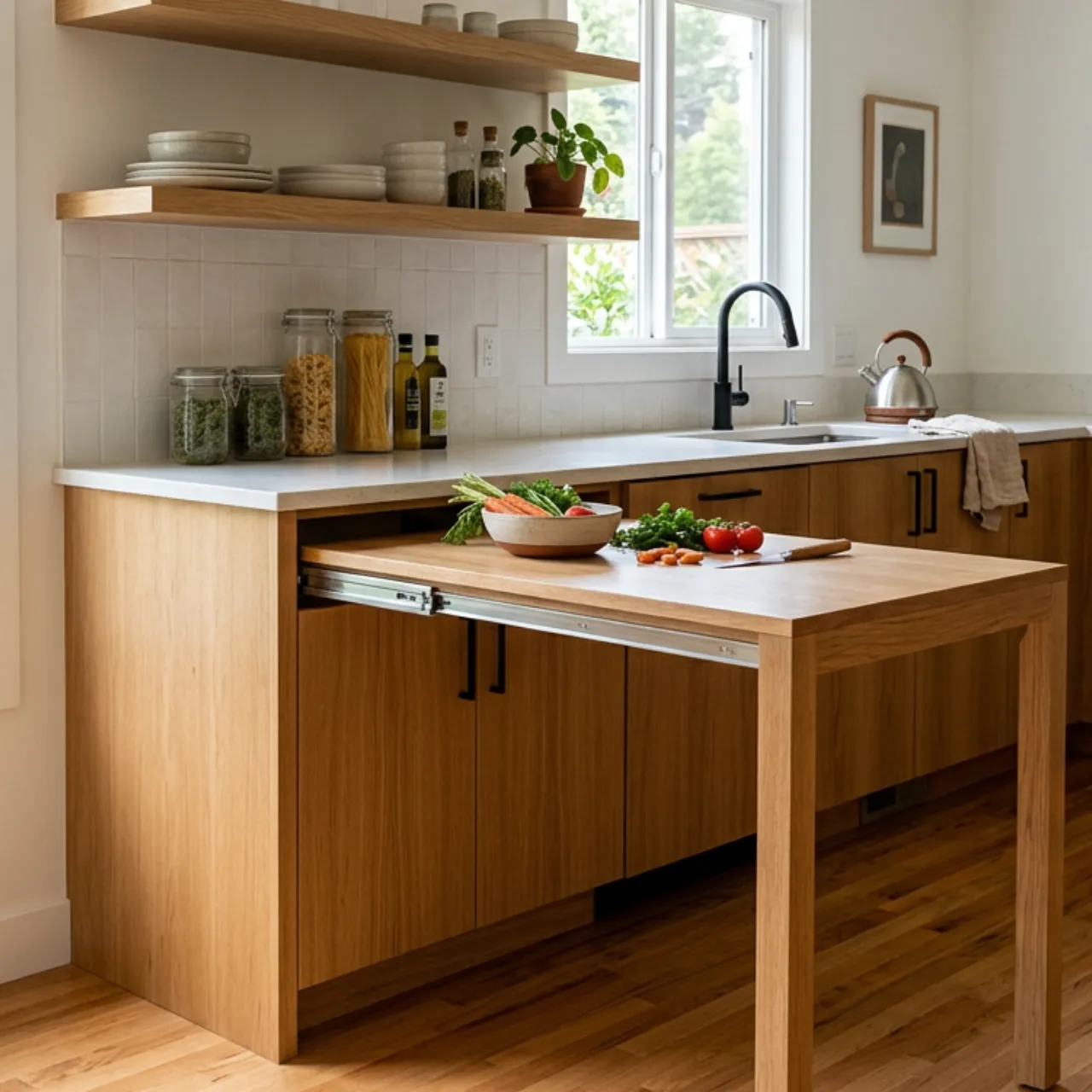
The anniversary collection reportedly included a palette of seven NCS colors in matte lacquer, along with a pull-out table and a built-in folding step, all offered without added cost. Those details are not nostalgic decoration. They are reminders that good design often comes from studying chores, movement, and reach.
That is why the Frankfurt Kitchen still gets talked about. It treated the kitchen as a workspace that needed efficiency, storage discipline, and deliberate arrangement. You can see echoes of that thinking in almost every modern custom kitchen cabinet plan, especially in smaller homes where every inch has to work.
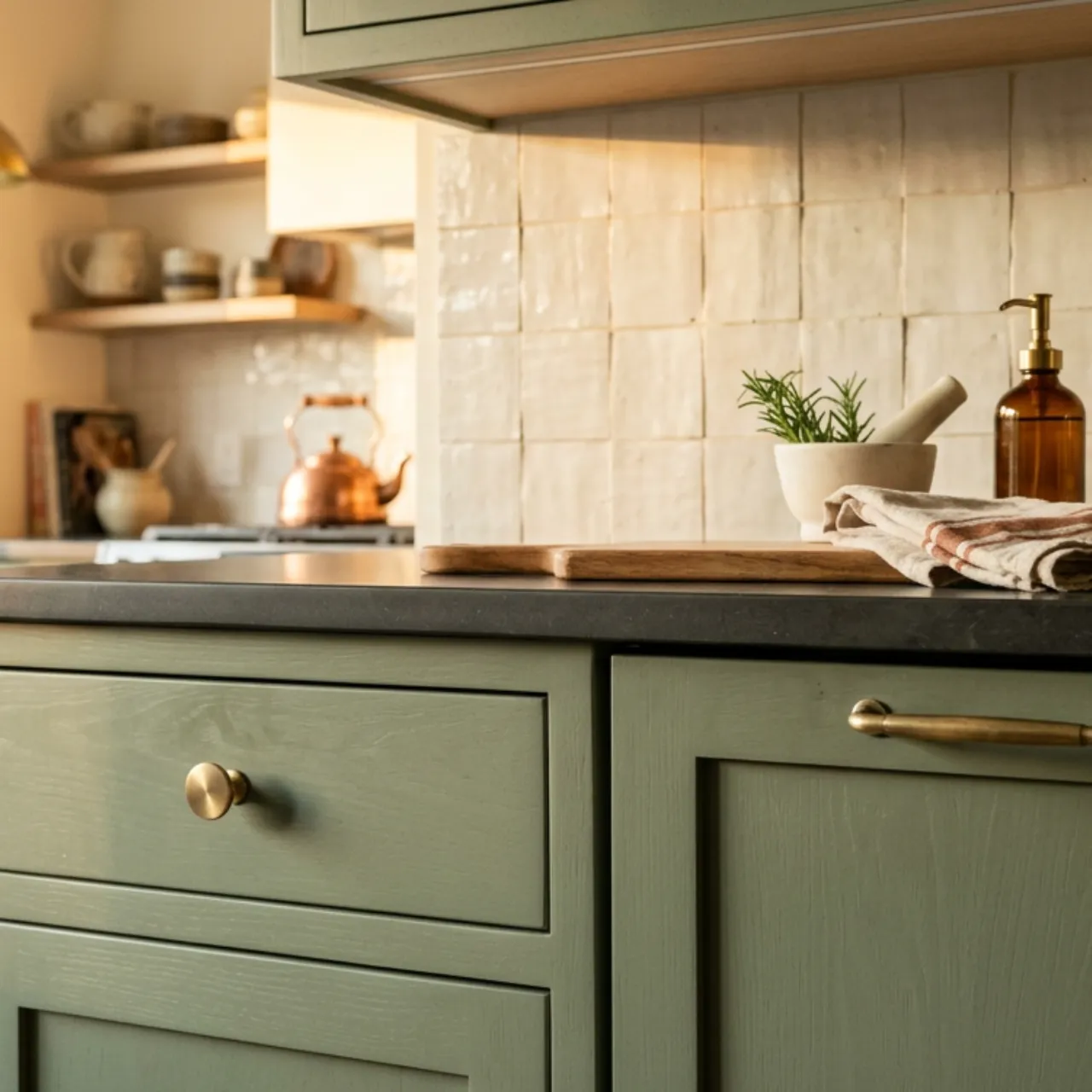
There is a useful lesson here for current kitchen remodeling and bathroom renovation projects. People often fixate on surface materials first. They want to talk about door style, countertop slabs, quartz veining, marble drama, or paint color. Fair enough, those choices are visible and expensive. But layout is usually the bigger decision. A smart cabinet run, a better appliance relationship, a more practical pantry wall, or a well-positioned vanity can improve daily life more than an upgraded finish ever will.
Luxury design is not only about rare materials. Sometimes it is about the quiet ease of a room that behaves well. And affordable quality often comes from spending money where function changes the experience, not where photos look more dramatic.
Another digest item focused on restaurant interiors, arguing that smart furniture layout can improve revenue, table turnover, and guest experience.
That is commercial hospitality language, but the underlying idea translates far beyond restaurants. Layout affects behavior. People sit longer in some arrangements, move more easily in others, and feel crowded or calm based on spacing, sightlines, and circulation.
In restaurants, that can influence sales per square foot. In homes, it influences stress.
Woodworkers and interior professionals already know this, even if they do not always say it plainly. Storage depth, aisle width, seating clearances, and door swing all shape how a room gets used. Closet and storage solutions are a classic example. A storage wall that looks tidy in elevation can still fail if shelves are too deep, hanging space is awkward, or access zones overlap. The same goes for kitchens. A beautiful island can become a nuisance if it interrupts the path between sink, refrigeration, and prep space.
This is one place where the woodworking trade overlaps with behavioral design in a very direct way. Furniture, casework, and built-ins are not neutral objects. They tell people where to stand, what to reach for, and whether a room feels effortless or irritating.
I wish more conversations about interiors started there.
The digest also included a profile of custom woodworker Navillus Woodworks, described as collaborating with artists, architects, and designers while using a range of materials and techniques to produce distinctive work.
Profiles like this are useful because they push back against a stale idea of woodworking as a siloed craft. In real high-skill practice, custom work is often collaborative by necessity. Architects care about integration with the building. Designers care about proportion, finish, and experience. Artists may introduce conceptual or sculptural goals that do not fit standard shop logic. The woodworker has to translate all of that into actual joinery, tolerances, sequencing, and material behavior.
That translation role is not glamorous, but it is where much of the value sits.
It also says something about where the industry is heading. The line between woodworking, furniture, interiors, and mixed-material fabrication keeps getting blurrier. A shop may work with hardwood one day, metal accents the next, and then interface with stone fabricators on a countertop detail. Knowing wood remains essential. So does knowing how wood meets everything else.
For readers outside the trade, this is a good reminder that custom does not just mean handmade. It often means coordinated problem-solving across several disciplines.
The June 2026 woodworking news cycle did not point to one clean narrative. That is probably the most honest takeaway.
Innovation is active, and awards are one way the industry makes that visible. Construction backlogs suggest work is still in the system, but confidence is softer and housing starts have weakened, especially in multifamily. Distribution channels remain important enough to support growing conventions. Sustainability is showing up in practical projects, like mill repurposing studies and post-fire reforestation, not just in branding language. Design continues to learn from history, especially in kitchens where function still drives the best results. And custom woodworking remains a collaborative craft, not a solitary one.
If you work around cabinets, furniture, millwork, remodeling, or materials, this kind of digest is useful because it rewards reading across categories. The reforestation story may matter to your future wood supply. The housing data may affect your lead flow. The design anniversary may shape what clients ask for next year. The trade-show growth may tell you where product decisions are being made.
Sometimes the industry tells the truth in fragments. June 2026 gave us several of them.