A page full of short member announcements can look minor at first. A new stain here. A new CEO there. A factory event, a software update, a company anniversary. Easy to skim.
But if you slow down, these items tell a pretty clear story about where cabinetry is heading in 2026.
The recent KCMA member news digest brings together updates from cabinet makers, suppliers, technology firms, and industry leaders. KCMA itself has a practical role in the cabinet industry. It promotes standards, advocates for the trade, and gives members tools to grow. That makes its member news more than a bulletin board. It is a decent snapshot of what companies think matters right now.
And what matters right now is not hard to spot. Leadership is changing. Automation is getting sharper. Finish and design trends are warming up. Supply chain conversations are less about panic and more about reliability. Older manufacturers are still celebrating longevity, but they are doing it in the same breath as innovation.
If you work in kitchen remodeling, specify a custom kitchen cabinet package, or just want to understand how home renovation trends connect to factory realities, there is a lot here to pay attention to.
Cabinet industry news often arrives in tiny pieces. A company launches a finish. Another promotes an executive. A supplier schedules a demo event. None of that feels dramatic on its own.
Taken together, though, these updates answer a bigger question: what are cabinet companies investing in when the market feels demanding and buyers want both speed and personalization?
That question matters beyond the factory floor. It affects lead times, finish consistency, hardware options, and how flexible a manufacturer can be when a kitchen cabinet order changes late in the process. It also affects adjacent work in a home renovation, including bathroom renovation projects, vanity selections, closet and storage solutions, and even the scheduling of countertop installation.
The KCMA news page itself was updated to make posts easier to find, with older items moved into an archive. That detail is small, but fitting. The industry is producing enough movement that organizing the information better has become necessary.
Several of the featured items focus on people moving into top roles.
Angela Bouma of Crystal Cabinet Works was elected KCMA president for a one year term beginning June 1, 2026. The detail that jumps out is her sustainability background. Sustainability in cabinetry is no longer a side conversation about recycled content or marketing language on a brochure. It increasingly touches sourcing, finish chemistry, certification, waste reduction, and transportation choices. When someone with that expertise leads an industry association, it usually means those issues are moving closer to the center.
That does not mean every cabinet buyer suddenly starts shopping by environmental scorecard alone. Most do not. Price, style, lead time, and durability still dominate. But sustainability has become tied to operational discipline, and operational discipline often improves the customer experience whether the customer notices the label or not.
Two other executive announcements reinforce that theme. Specified Components Company named Nathan Klomp chief executive officer, effective immediately. Häfele America appointed Olivier Vareille as president, effective March 9, 2026. Different companies, different parts of the industry, same broad signal: leadership matters because the business is trying to get more precise.
That precision shows up everywhere. In hardware. In component supply. In installation tolerances. In how well a manufacturer can support modern cabinetry across kitchens, bathrooms, and utility spaces. A leadership change is not just corporate news. It often previews what a company will prioritize, whether that is efficiency, market expansion, product development, or tighter execution.
I think people outside the trade sometimes underestimate that. They treat executive announcements like filler. In manufacturing, they rarely are.
One of the simpler items in the digest may also be one of the most revealing. Showplace Cabinetry introduced a new stain finish called Bourbon, described as a warm, timeless mid tone brown.
That sounds straightforward, and it is. It is also a useful clue about where visual preferences are settling.
For years, many kitchen remodeling projects leaned heavily on bright whites, cool grays, and high contrast color schemes. Those looks still exist, and some of them still look great. But a lot of homeowners, designers, and builders are moving toward warmth again, just in a more restrained way than the dark cherry era many people remember.
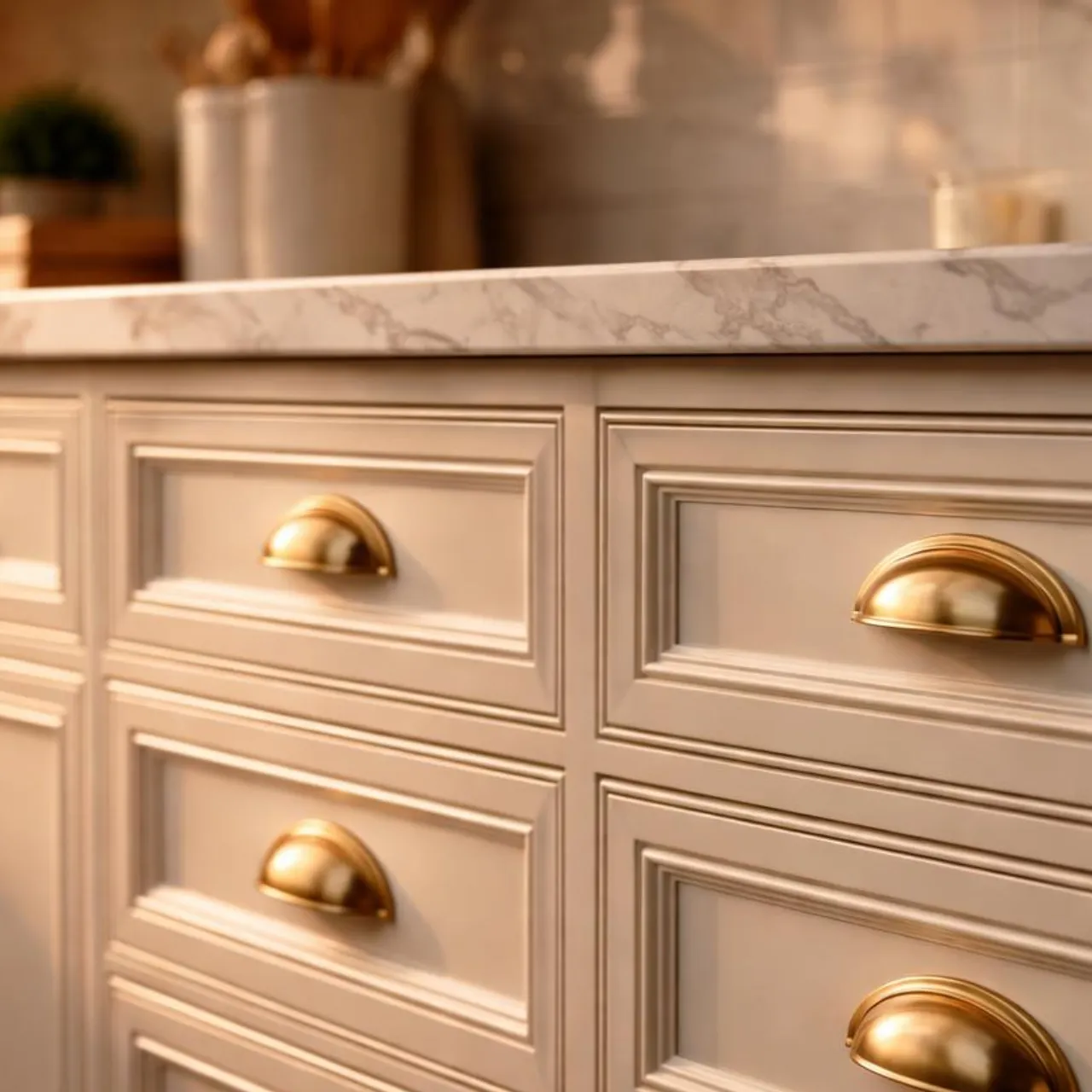
A mid tone brown stain sits in a sweet spot. It feels grounded without being heavy. It can work with a quartz countertop that has soft veining, and it can also pair well with marble when the overall design aims for a quieter kind of luxury design. In bathroom renovation work, that same warmth can make a vanity feel less clinical. In closets and storage spaces, it keeps built-ins from feeling too stark.
This is one of those trends that sounds aesthetic but has practical implications. Warm wood tones hide certain kinds of daily wear better than painted surfaces. They also give manufacturers room to emphasize grain, texture, and finish quality. That matters in both premium and affordable quality cabinetry lines.
There is a difference, though, between a warm finish looking good on a sample chip and looking good in a real room. Lighting changes everything. So do flooring tones, backsplash materials, and the undertones in a countertop slab. When you see a new stain launch like Bourbon, it is worth reading it as both a design move and a manufacturing move. Companies introduce finishes they think they can sell, yes, but also finishes they believe answer a growing pattern in demand.
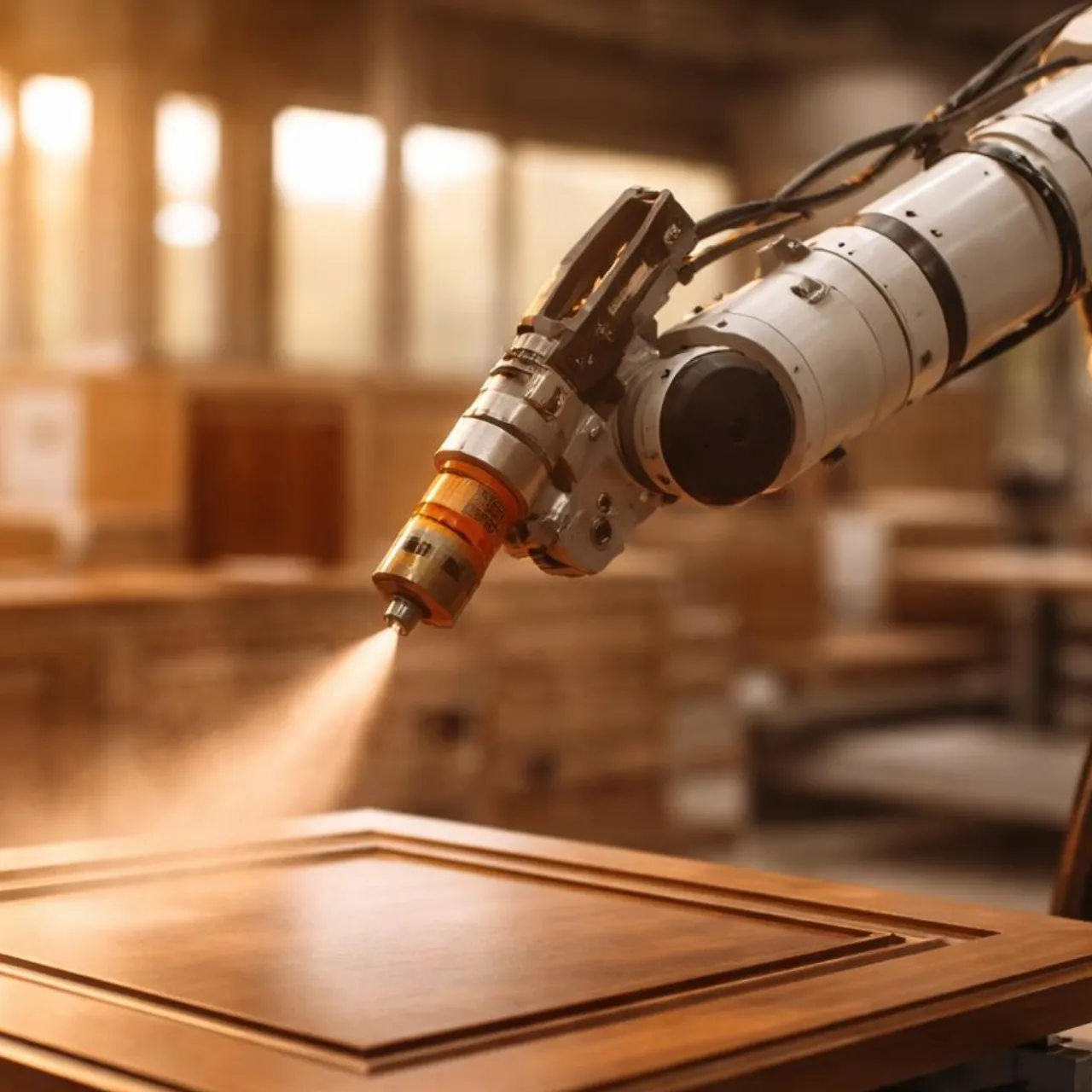
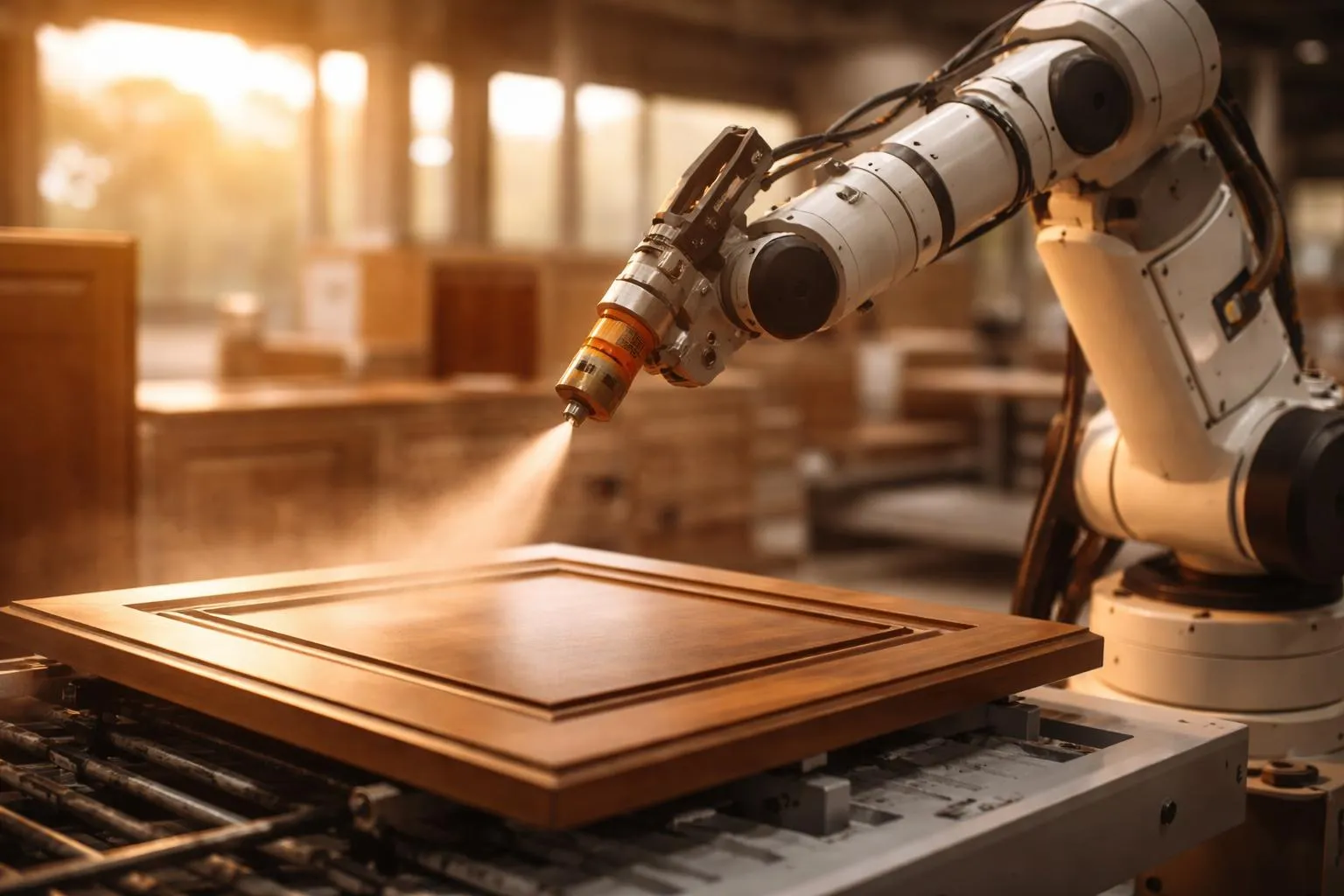
The strongest pattern in the digest is automation, but not in the vague, futuristic way people often talk about it.
Hansen & Company Woodworks announced HCo 2.0, described as North America’s first fully automated frameless batch one cabinet production line. That is a technical statement with real meaning.
Batch one production is about building highly customized orders efficiently, often with every cabinet slightly different from the next. That is very different from producing long runs of identical boxes. It matters because modern buyers want customization. They want a custom kitchen cabinet layout fitted to awkward walls, unique appliance sizes, storage preferences, or a specific vanity depth. They also want it without the cost and delays that used to come with bespoke work.
So when a company automates batch one frameless production, it is not chasing robots for the sake of optics. It is trying to solve the hardest problem in residential millwork: how to make one off variation repeatable.
That same shift toward practical automation shows up in software. FinishMatch announced an upgraded V2 version of its computer vision tool, now able to detect grain pattern, glaze, and distress level from a single photo. If that claim holds up in day to day use, it is a big deal.
Finish matching has always had some gray area. A phone photo is not perfect. Lighting distorts color. Distressing can be subtle. Grain character varies. Yet customers still expect consistency, especially when adding pieces to existing cabinetry or replacing damaged components. A tool that can interpret more finish detail from one image could speed up quoting, reduce mismatches, and simplify communication between field teams and factories.
Then there are the event driven technology announcements. Stiles Machinery said it will showcase technologies and services at IWF 2026 meant to help manufacturers handle current challenges and perform better. Würth Louis and Company announced its Open House and Demo Days for June 3 and 4, 2026, focused on advanced manufacturing solutions.
Trade events sometimes get dismissed as showpieces. Fair enough, some of them can feel that way. But in the cabinet business, demo driven events still matter because machines, software, and process tools are physical decisions. A company buying equipment needs to see throughput, edge quality, tool change behavior, material handling, and integration in context.
The common thread across all four items is pretty clear. Automation in 2026 is less about replacing people in a dramatic way and more about making variation easier to manage. That is a big difference. For anyone ordering cabinetry, it usually translates into better consistency and, in some cases, more realistic timelines for customized work.
One of the featured pieces is a sponsored article by Sylvain Duchesne, president of Olon Industries, titled “Global Supply Chains Didn’t Break. They Were Always Fragile.”
That argument hits harder than the usual supply chain cliché because it moves past the idea that disruption was a freak event. The point is structural. Many systems looked stable only because stress had not exposed their weak points yet.
That framing matters for cabinetry. Cabinet production depends on a chain of materials and components that has to behave in sequence. Panels, hardware, edgebanding, coatings, drawer systems, packaging, freight, installation schedules. If one link slips, the whole job can wobble. And once a job wobbles, the pain spreads outward. Appliance delivery shifts. A quartz or marble countertop templating date moves. Trades get rescheduled. A kitchen remodeling timeline that seemed tight but manageable suddenly becomes annoying for everyone.
The article’s main takeaway is that reliability is now a primary sourcing driver. I think that is exactly right. Low cost is still tempting. Fast lead times are still attractive. But a lot of manufacturers have learned that unreliable speed is worse than honest timing.
This is less flashy than automation and less visible than a new finish, but it may be the most important theme in the digest. Reliable sourcing shapes whether cabinet makers can keep promises, and promise keeping is still one of the most valuable things a manufacturer can do.
Marsh Cabinets celebrated 120 years of manufacturing with a weeklong “Legacy Week” event in High Point, focused on craftsmanship, people, and industry partnerships.
Anniversary news can be sentimental. Sometimes too sentimental, honestly. But in manufacturing, long history is not meaningless. A company that lasts 120 years has lived through material shortages, design swings, labor changes, recessions, and technology shifts. That does not guarantee excellence. Old companies can get stale. But longevity often means the business has learned how to adapt without losing every habit that made its work dependable in the first place.
That is what I find interesting in this digest. Heritage is not being presented as the opposite of innovation. It is sitting right next to software upgrades, automated lines, and demo events. That feels accurate. The cabinet industry still depends on craftsmanship, but craftsmanship now coexists with scanners, machine vision, and production systems built for variation.
For buyers, that mix is worth appreciating. A kitchen cabinet or vanity is not only a design object. It is also a manufactured product that has to arrive correctly, fit cleanly, and survive years of use.
If you are planning a home renovation, the industry details above can feel distant. They are not. They shape what you can order and how smoothly the job goes.
A few practical questions can help you read past surface level style talk:
Ask how finish consistency is managed, especially if you want future additions or replacements.
Ask how the manufacturer handles custom sizing, not just standard boxes with filler pieces.
Ask what happens if a material or component is delayed, and whether alternatives are built into the process.
Ask how a wood finish will relate to nearby materials like quartz, marble, tile, and flooring in real lighting.
Ask whether the cabinet line is equally strong for kitchen cabinet runs, bathroom vanity work, and closet and storage solutions if your project covers multiple spaces.
Those questions matter whether the project aims for high end luxury design or more affordable quality choices. The same operational issues sit underneath both.
Read straight through, the KCMA member digest paints a cabinet industry that is trying to get better at two things at once.
First, it is trying to become more exact. Better leadership focus, more useful automation, smarter finish analysis, more serious sourcing decisions.
Second, it is trying to stay human. Warm stains instead of cold sameness. Anniversary celebrations that talk about people and partnerships. An association still centered on standards and advocacy, not just speed.
That mix feels healthy to me. The cabinet business should care about robotics and software. It should also care about grain, finish tone, and the craft decisions people notice every day in a kitchen or bath.
So no, these announcements are not just filler. They are a pretty honest snapshot of where cabinetry sits in 2026: warmer in style, stricter in operations, and very aware that reliability is now part of design.