
Bathroom Ventilation in Burnaby: What to Plan Before You Renovate

Planning a bathroom renovation in Burnaby? Learn how fans, ductwork, replacement air, and controls prevent lingering moisture. Plan ventilation before you build.
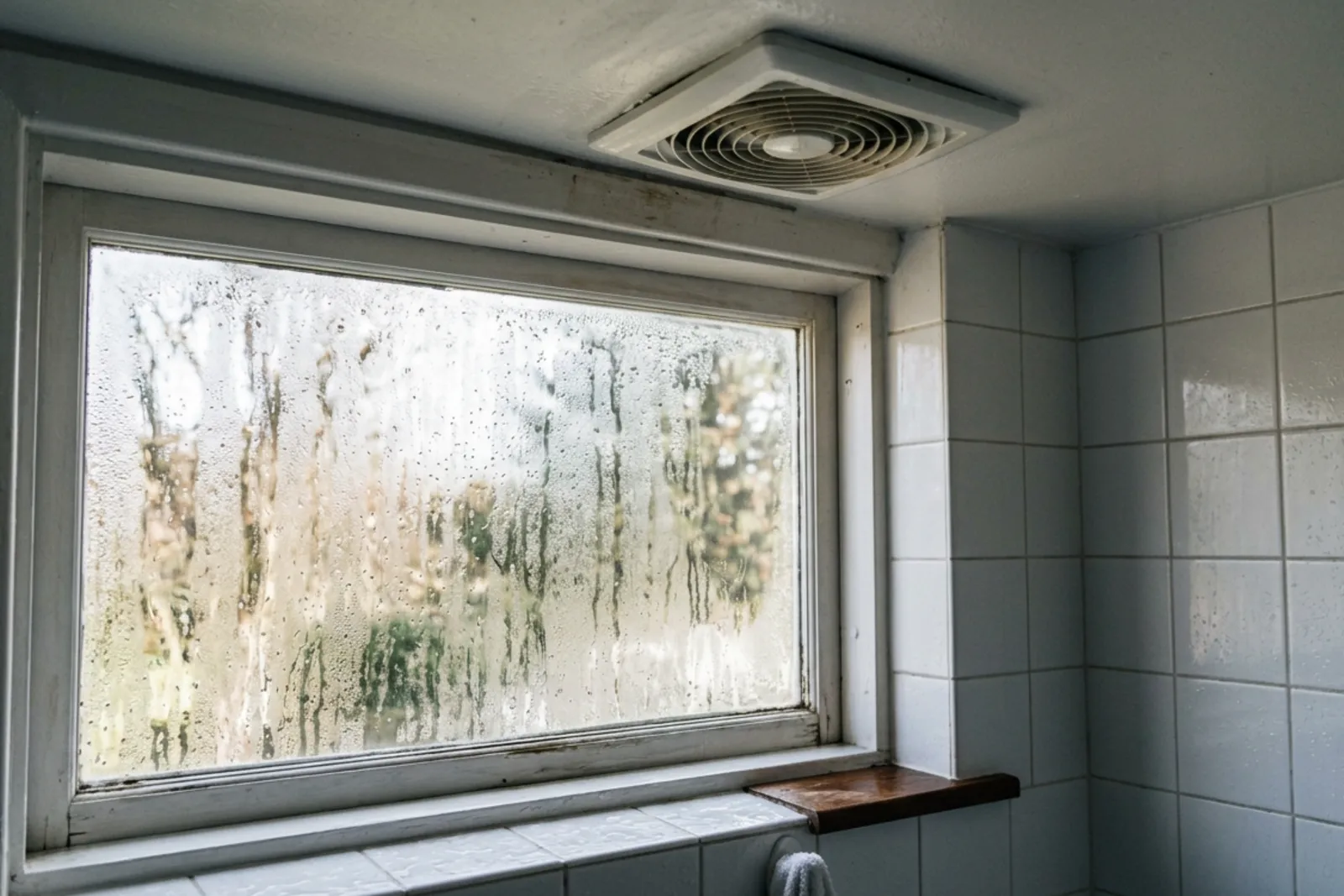
A bathroom can look finished and still have a moisture problem. The tile is new, the vanity fits perfectly, and the mirror lighting is exactly right. Yet after every shower, water collects on the window, the ceiling stays damp, and dark spots return to the same corner.
That pattern deserves more attention than another coat of paint.
In Burnaby’s wet coastal climate, bathroom ventilation should be part of the renovation plan before finishes are selected. A fan that is undersized, poorly ducted, or difficult to use can leave moisture behind. Even a powerful fan may accomplish little if replacement air cannot enter the room.
A well-planned bathroom renovation addresses the whole moisture path: where water vapor comes from, how it moves through the room, and where it leaves the building. Here is what homeowners should understand before walls and ceilings are closed.
Why Condensation Happens in a Bathroom
Warm air can hold more water vapor than cold air. During a shower, the amount of moisture in the bathroom rises quickly. When that humid air touches a surface below its dew point, water condenses on it.
Mirrors make the process obvious. Exterior wall corners, window frames, and cold ceiling areas can experience the same thing without attracting much attention.
Condensation does not automatically mean a bathroom has a leak. But repeated wetting can damage paint, soften drywall, swell cabinetry, and create conditions that support mould growth. Dust and soap residue on surfaces can provide nutrients, even where the underlying material itself is relatively moisture-resistant.
The location matters. Moisture spread across a cold window after a shower suggests a different problem than a persistent stain beneath an upstairs bathtub. A renovation should identify the cause rather than assume every damp patch needs a stronger fan.
Does Burnaby’s Rainy Weather Make Ventilation Less Effective?
It is reasonable to wonder why bringing outdoor air into a home helps when it is raining outside.
The distinction is between relative humidity and the actual amount of moisture in the air. Cool outdoor air can have high relative humidity while containing less water vapor than warm indoor air. Once that outdoor air is heated, its relative humidity falls, so it can help remove indoor moisture.
This is why ventilation can still dry a bathroom during a wet coastal winter. However, ventilation has limits. During warm, humid weather, additional outdoor air may provide less drying, and some homes need dehumidification or cooling as well.
A Bathroom Fan May Have More Than One Job
Homeowners often think of an exhaust fan as an odor-control appliance. In some homes, it also forms part of the dwelling’s required mechanical ventilation system.
British Columbia’s building requirements address ventilation at both the room and dwelling level. Depending on the building’s design, a bathroom fan may provide local exhaust, contribute to whole-home ventilation, or work alongside a heat recovery ventilator or another mechanical system.
That distinction affects renovation decisions. Replacing a continuously operating fan with a model that runs only when someone turns on the light could interfere with the original ventilation strategy.
Before changing the equipment or controls, establish what the existing fan does. A wall timer does not tell the whole story. There may be separate controls, interconnected equipment, or a low-speed setting intended to operate continuously.
Applicable requirements depend on the building, the work being done, and the permit conditions. Confirm the relevant code provisions and City of Burnaby requirements with the project’s qualified professionals. An existing bathroom renovation is not automatically subject to every requirement that applies to a new home, but existing conditions should not be treated as proof that an arrangement is acceptable.
Investigate the Existing Problem Before Choosing a Fan
A useful assessment begins with observations. How long does moisture remain after a shower? Is the room damp only during use, or throughout the day? Does the fan sound loud while moving very little air?
The assessment should also look beyond the visible grille. An old fan may connect to a crushed flexible duct, an obstructed exterior hood, or a duct that ends inside the attic. Replacing the fan without correcting those conditions leaves much of the problem intact.
Persistent dampness can also come from plumbing leaks, failed shower waterproofing, exterior water entry, or cold building assemblies. If the same patch remains wet when the bathroom has not been used, investigate it before treating ventilation as the sole solution.
A tissue held near the grille can indicate whether there is some suction. It cannot confirm that the fan delivers its required airflow. That takes appropriate measurement.
Plan the Entire Exhaust Path
The fan, duct, exterior termination, and replacement-air route work together. Choosing one component without considering the others is a common renovation mistake.
Choose Airflow for the Actual Installation
A fan’s advertised airflow is measured under specified test conditions. Installed performance depends on the resistance created by the duct system.
Long runs, multiple elbows, undersized ductwork, and restrictive exterior fittings can reduce airflow. A fan with an impressive rating on its box may remove less air than expected once connected.
Selection should account for bathroom size, shower use, the duct route, and the ventilation design. A frequently used family bathroom has different demands from a small powder room. Steam showers need particular attention to both moisture management and enclosure construction.
Noise matters, too. People are less likely to use an irritating fan for long enough. Compare sound ratings at the intended operating setting, while remembering that poor installation can make a quiet fan noisy.
Keep Ductwork Direct and Properly Detailed
Bathroom exhaust should discharge outdoors, not into an attic, roof cavity, or crawlspace. Moving damp air into a concealed space can create a more serious problem than the one visible in the bathroom.
The duct should follow a practical, direct route with as few unnecessary bends as possible. Its diameter should suit the fan and the design requirements. Flexible duct, where permitted and appropriate, should not be left sagging or compressed.
Ductwork passing through cold spaces needs suitable insulation and condensation management. Joints need proper sealing. The exterior hood must allow air to discharge while limiting weather entry and unwanted backflow.
These details are easiest to inspect while construction is open. Once a finished ceiling conceals them, corrections become more disruptive.
Provide a Route for Replacement Air
An exhaust fan cannot keep removing air unless other air can enter.
In many bathrooms, replacement air enters through an appropriate gap beneath the door or another designed transfer path. A tight-fitting new door, a thick bath mat, or a change in flooring can reduce that opening.
If ventilation works noticeably better with the door open, a restricted air path may be part of the problem. The answer is not automatically a larger fan.
Where a home has naturally vented fuel-burning equipment, changes to exhaust capacity also warrant professional consideration of depressurization and combustion safety.
Use Controls That Match How the Bathroom Is Used
A fan that stops when someone switches off the light often stops too soon. Moisture remains on shower walls, grout joints, towels, and other surfaces after the person has left.
A separate countdown timer is often a practical choice. Running the fan during bathing and for roughly 20 to 30 minutes afterward is a useful starting point, but the necessary time varies. Long showers, cool surfaces, and limited room heating can extend drying time.
Humidity-sensing controls can help, especially when users routinely forget the fan. Their settings still need attention. A poorly adjusted sensor may stop too early or run unnecessarily.
For bathrooms connected to a central ventilation system, the appropriate solution may be a boost control rather than a separate exhaust fan. Adding independent equipment without reviewing the system can upset airflow balance.
The best controls make correct operation easy. Homeowners should not need to remember a complicated sequence every time they shower.
Coordinate Ventilation With Waterproofing, Heating, and Cabinetry
Ventilation removes water vapor. It does not replace a waterproof shower assembly.
Tile and grout are not, by themselves, a complete waterproofing system. The shower needs appropriate waterproofing, properly detailed penetrations, and drainage designed for the assembly. A fan cannot compensate for water escaping behind tile.
Heating also matters because colder surfaces are more likely to collect condensation. Persistent moisture at an exterior corner may indicate missing insulation, air leakage, or a thermal bridge. Renovation work can provide an opportunity to inspect those conditions rather than conceal them.
Be careful when modifying insulation, air barriers, or vapor-control layers. Their arrangement needs to suit the building assembly and local climate. Adding material without understanding the wall can create another moisture problem.
Protect the Vanity and Nearby Storage
Bathroom cabinetry is exposed to splashes, wet hands, and humid air. Ventilation helps limit that exposure, but construction details still count.
A vanity should use materials and finishes suitable for the location. Cut edges, plumbing penetrations, and joints need appropriate treatment. Water should not be allowed to pool against cabinet panels or collect unnoticed beneath a sink.
A quartz or marble countertop will not protect poorly detailed cabinetry underneath it. Marble also needs care appropriate to its sensitivity to acids and staining.
For closet and storage solutions beside a bathroom, avoid trapping damp towels in tightly enclosed spaces. If adjacent storage smells musty, investigate moisture and airflow rather than relying on fragrance products.
Condos and Townhomes Need Extra Coordination
In a strata property, the visible bathroom fan may connect to shared ductwork or equipment beyond the owner’s unit.
An exterior wall, roof penetration, or common exhaust shaft may be common property. Changing a fan, duct connection, or termination can require strata approval and professional review. Fire separations and approved penetration details may also be involved.
Before purchasing equipment, establish whether the fan serves only the bathroom and whether the duct is dedicated or shared. Confirm what approvals are needed and who is responsible for the connected components.
An apparently simple fan upgrade can affect neighboring units if it changes the pressure or airflow in a shared system.
What to Confirm Before Construction Ends
A renovation provides a short window to verify work that will soon be concealed. Ask for the ventilation details to be included in the scope, not left as an assumption.
Before final completion, confirm that:
The fan or central exhaust connection suits the intended ventilation design.
The duct route, sizing, insulation, and exterior termination have been checked.
Replacement air can enter with the bathroom door closed.
Installed airflow has been verified using an appropriate method.
Controls are labeled, explained, and set for normal use.
Photographs of concealed ductwork are useful records. Keep equipment information and maintenance instructions with the rest of the renovation documents.
After the Renovation, Watch How the Room Dries
A brief period of mirror fogging does not necessarily indicate a failure. More useful signs are persistent droplets, damp ceilings, recurring mould, musty odors, and surfaces that remain wet long after normal use.
Clean the fan grille and maintain the equipment according to its instructions. Keep the exterior termination clear where it can be safely inspected. Wiping excess water from shower walls can reduce the moisture left to evaporate, although it should supplement proper ventilation rather than compensate for poor performance.
If mould returns after cleaning, investigate the moisture source. Extensive growth, concealed contamination, or concerns involving occupants with respiratory conditions warrant qualified advice.
The real test of a bathroom renovation comes after the shower, when the room needs to dry. Attractive finishes matter, but reliable ventilation depends on less visible decisions: a workable duct route, adequate replacement air, suitable controls, and verified airflow. Make those decisions before construction closes them in.