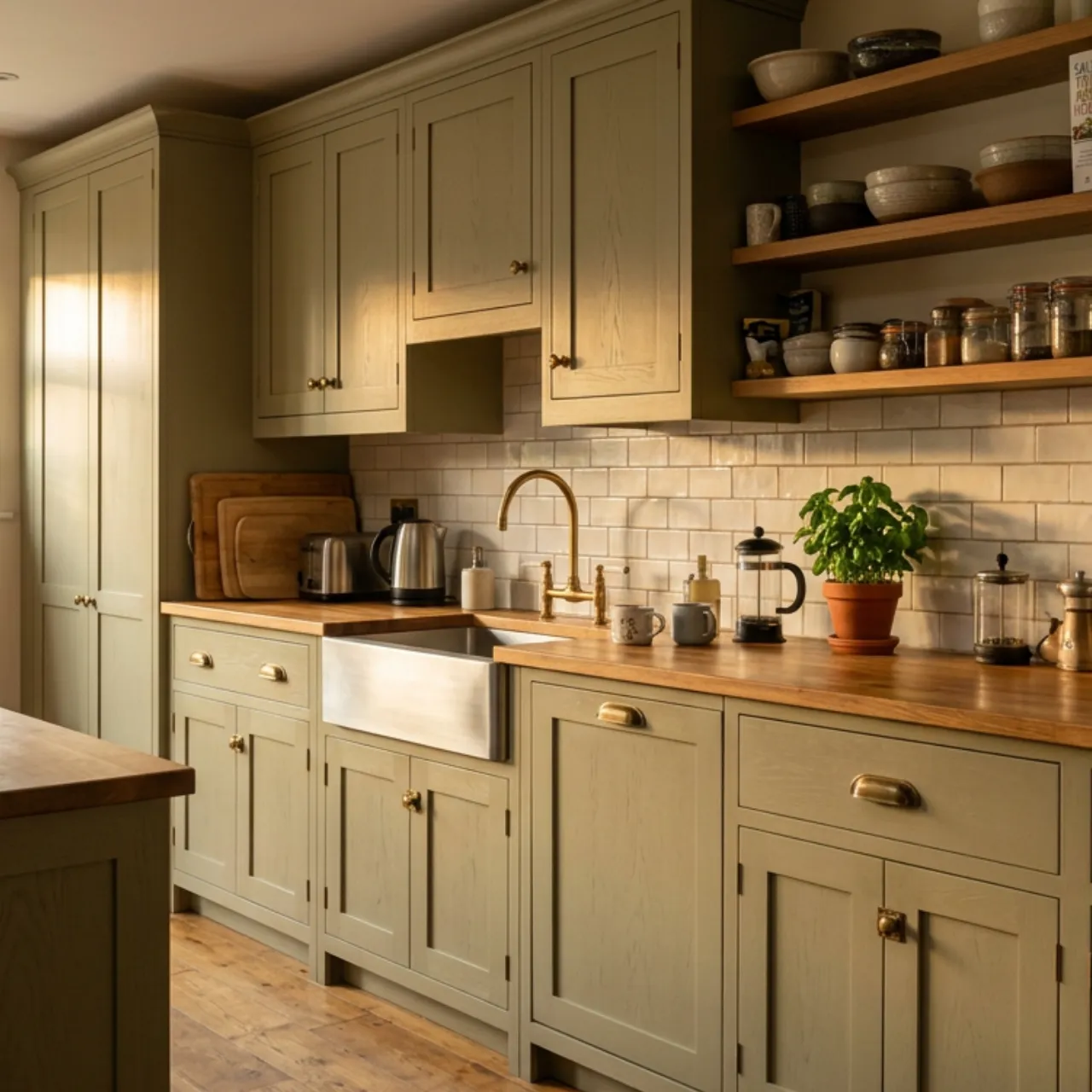
A cabinet purchase can look simple from the outside. Choose a door style, pick a colour, settle on a countertop, and schedule installation. Anyone who has lived through a kitchen remodeling project knows it is rarely that neat.
Cabinetry sits at the intersection of design, construction, daily use, and long-term maintenance. A small measurement error can disrupt an appliance installation. A weak finish can make a new kitchen look tired within a few years. Poorly designed storage turns an expensive room into a daily frustration.
This is where industry associations and professional standards matter. They create shared expectations for manufacturers, designers, installers, and homeowners. Their work may seem distant from the moment you are choosing a kitchen cabinet door, but standards influence the quality, safety, labeling, and performance of the products that end up in your home.
For anyone planning a home renovation, understanding the purpose of cabinet industry organizations can make it easier to ask better questions and compare options with more confidence.
An industry association is a member organization built around a specific trade or profession. In the cabinet sector, its members may include cabinet manufacturers, suppliers, hardware companies, designers, distributors, and other businesses connected to cabinetry.
The association’s work generally falls into a few practical areas: establishing standards, supporting education, advocating for the industry, and connecting members with useful resources.
That may sound administrative, and parts of it are. Still, the effects can be very real for homeowners. Standards give manufacturers a common target for product performance. Educational resources help businesses understand changing regulations and materials. Advocacy gives the industry a voice when building codes, trade rules, environmental requirements, or product regulations are being discussed.
A well-run association also helps make the market less confusing. Cabinet companies vary widely in size, specialization, materials, and price. Membership alone does not guarantee that every project will be perfect, but an organization that promotes clear standards gives buyers another way to investigate a manufacturer’s practices.
For a homeowner, the biggest value is often indirect: more consistent information, clearer product identification, and better accountability.
Cabinets are often evaluated by appearance first. That is understandable. The doors are right in front of you, and the finish sets the tone for the room. But a kitchen cabinet is a working product. It needs to hold weight, resist moisture, tolerate repeated opening and closing, and remain functional through years of use.
Industry standards can address areas such as:
Construction strength and load capacity
Door, drawer, and hinge durability
Finish resistance to moisture, household products, and everyday wear
Material safety and emissions requirements
Product labeling and identification
Manufacturing consistency
The exact criteria vary by program and product category, but the principle is steady. A cabinet should perform as a cabinet, not merely photograph well on installation day.
Consider a deep drawer used for dishes, pots, or pantry staples. It may carry substantial weight every day. Quality drawer-box construction, appropriate slide hardware, and solid mounting are not glamorous topics. They are the details you notice when a drawer begins to sag, rack, or stick.
The same goes for finishes. Kitchens deal with grease, steam, food splashes, and frequent cleaning. Bathrooms add humidity, hair products, cosmetics, and occasional water spills around a vanity. A cabinet finish needs to cope with ordinary life, not just a showroom environment.
This does not mean every cabinet needs the most expensive construction available. Affordable quality is possible when a project is designed intelligently and the buyer understands where durability matters most.
Certification programs are one of the more visible ways industry standards reach consumers. A certification mark generally indicates that a product or manufacturer has met defined requirements and has gone through some form of review, testing, inspection, or ongoing compliance process.
The details matter. “Certified” is not a universal term with one fixed meaning. Before treating a label as proof of quality, find out what the certification actually covers.
Ask questions such as:
Which organization administers the certification?
What tests or construction requirements are included?
Does the certification apply to the entire cabinet line or only certain products?
Is compliance checked once, or reviewed regularly?
Does the program cover environmental, safety, durability, or performance factors?
Can the certification be verified through a company code or public search tool?
A credible certification program should make this information accessible. If you cannot determine what a claim means, it should carry less weight in your decision.
Certification is particularly helpful when comparing several cabinet lines with similar styles. Two white shaker kitchens can look almost identical under showroom lighting. Their construction, materials, hardware, and finish performance may be quite different. Documentation gives you something more useful than a salesperson’s broad assurance that one product is “better.”
Still, certification is one piece of the puzzle. A cabinet’s fit for your project also depends on design, installation quality, lead time, service, warranty terms, and how well the layout works for your household.
Cabinets often outlast the paperwork from the renovation. Years later, a homeowner may need a replacement door, a matching touch-up kit, a new drawer front, or warranty assistance. At that point, knowing who made the cabinetry becomes very important.
Industry associations sometimes provide a company code search tool or a directory that helps people identify a cabinet manufacturer. This may seem like a niche resource, but it solves a surprisingly common problem.
Imagine that a hinge fails six years after a kitchen remodeling project. The homeowner wants to replace the door rather than redo an entire section of cabinetry. If the cabinet manufacturer and product line can be identified, there is a chance of finding a compatible part or a close match. Without that information, the repair becomes more difficult and often more expensive.
During installation, keep a project file that includes:
Cabinet manufacturer and product line
Door style and finish name
Order number and installation date
Design drawings and final measurements
Warranty documents
Hardware manufacturer and model numbers
Photos of cabinet labels, codes, and tags
Contact information for the seller or installer
It takes ten minutes to organize this material. It can save days of detective work later.
This practice matters in every room with built-in cabinetry. A kitchen cabinet project may get the most attention, but bathroom renovation projects, mudroom built-ins, laundry cabinets, and closet and storage solutions also benefit from clear records.
Standards cannot design your kitchen for you. They do, however, create a baseline that lets design conversations focus on what actually matters.
A homeowner choosing a custom kitchen cabinet layout has many decisions to make: cabinet depth, door construction, interior accessories, appliance clearances, drawer sizes, and material choices. Without a reliable quality baseline, it is easy to spend too much time trying to decode vague claims and too little time planning the room.
Once construction quality has been established, the more personal questions can take center stage.
How many people cook at once? Do you bake frequently? Are dishes stored near the dishwasher? Does someone in the household need easier access to heavy items? Will the kitchen double as a homework station, entertaining space, or home office?
These questions shape a good layout more than trend boards do.
For example, a family that cooks several evenings each week may prefer wide, sturdy drawers near the cooktop for pots and pans. Someone who likes a minimal look may want appliance garages or tall pantry storage to reduce visual clutter. In a compact bathroom renovation, a wall-mounted vanity can make floor space feel more open, though it needs adequate wall blocking and careful plumbing coordination.
Good cabinet planning is practical before it is decorative. That may sound less exciting, but it is how you end up liking the room after the novelty wears off.
The cabinet box, doors, finish, and countertop should be chosen with the room’s demands in mind. There is no single “best” material for every project.
Solid wood doors can bring warmth and natural variation, but wood responds to changes in humidity. Painted finishes have a clean, tailored appearance, though seams and joints may become more visible over time as materials expand and contract. Thermofoil and laminate options can provide durable, cost-conscious finishes in many styles, but quality varies among products.
Cabinet boxes may use plywood, particleboard, medium-density fiberboard, or a mix of materials. Each has strengths and limits. Plywood generally has a strong reputation for screw-holding and moisture resistance, especially when properly finished. Engineered panels can also perform well in the right application and often help manage project costs. The important question is not simply, “Is it plywood?” Ask where each material is used, how edges are protected, and what hardware supports the cabinet.
Countertop selection deserves the same level of thought. Quartz is popular because it has a consistent appearance and requires relatively simple day-to-day care. Marble has a distinctive look that many people love, but it is more vulnerable to etching and staining. That does not make marble a bad choice. It means it is a choice for someone comfortable with a surface that may develop character through use.
A high-use family kitchen may benefit from a low-maintenance quartz countertop. A powder room vanity, used less intensely, may be a more forgiving place to use marble. The right answer depends on how you live, not what is currently popular online.
Most homeowners will never read an industry association’s governance documents, and they do not need to. Its public-facing resources can still be useful during research.
Look for member directories, certification pages, educational guides, company identification tools, and clear contact information. These resources can help you verify basic claims and understand what a manufacturer’s membership or certification means.
When speaking with a cabinet provider, ask direct questions. A reputable professional should be comfortable discussing construction and documentation without making you feel difficult for asking.
You might ask:
Is this cabinet line certified through an independent program?
Where can I find the manufacturer’s company code or product label?
What is the drawer construction and weight rating?
What material is used for the cabinet box, shelving, and back panel?
What does the warranty cover, and who handles service?
How are replacement doors or parts ordered later?
Are there finish samples I can take home and view in my lighting?
Pay attention to the quality of the answers, not just the confidence behind them. “It’s premium” is not an answer. “The drawer box uses this material, the slides are rated for this load, and here is the warranty document” is an answer.
An association website that includes a “skip to main content” link may not seem connected to cabinetry at first glance. It is, in a broader sense. It shows awareness that people use information in different ways, including with keyboards and screen readers.
Accessibility deserves equal attention in physical spaces.
Accessible cabinet design can include pull-out shelves instead of deep fixed shelves, drawer-based base cabinets, easy-grip hardware, adequate pathway widths, lower work areas, and lighting that reduces shadows on counters. These choices are helpful for people with disabilities, older adults, children, and anyone carrying a hot pot while trying to find a utensil.
Universal design is sometimes treated as a specialized category. In reality, much of it is just thoughtful planning. A full-extension drawer is easier for nearly everyone to use than a dark, deep cabinet where items disappear at the back.
If a renovation has specific mobility or access requirements, bring them up early. Retrofitting after cabinet orders are placed is frustrating and expensive.
Cabinet industry standards are not the most glamorous part of a home renovation. Nobody starts a kitchen remodeling scrapbook with a photo of a certification label. Yet these behind-the-scenes systems affect the quality and clarity of the choices in front of you.
Look beyond door colour and display-room styling. Learn who made the cabinetry, what the product claims mean, how it is built, and whether replacement parts can be identified later. Keep your records. Ask precise questions. Choose materials that suit the realities of your kitchen, bathroom, or storage space.
Luxury design has its place, but it should never depend on vague promises. The most satisfying cabinetry combines a look you enjoy with construction, function, and documentation that hold up when real life begins.