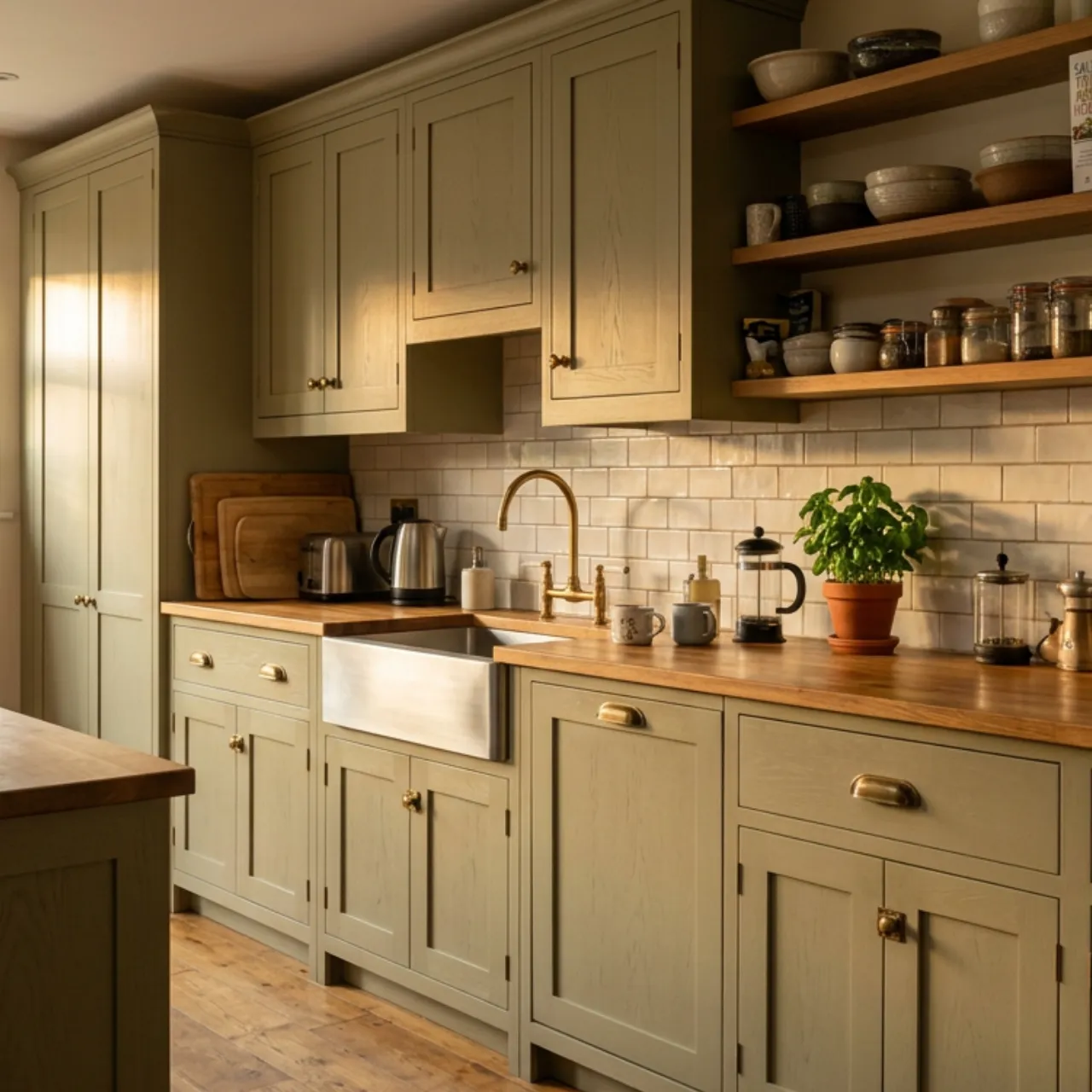
The cabinet industry’s June 2026 member news may look like a collection of separate announcements: a new executive, a brown stain, an automated production line, an open house. But taken together, these updates tell a useful story for anyone considering a home renovation.
Cabinetry sits at the intersection of design, manufacturing, logistics, and installation. A homeowner may first think about door styles, storage needs, or countertop materials. Those choices matter. Yet the experience of a kitchen remodeling or bathroom renovation project is also shaped by less visible factors, including leadership decisions, factory capacity, supply-chain planning, and the technology used to build cabinets.
Here is what the month’s announcements reveal, and how those shifts can affect a future kitchen cabinet, vanity, closet, or storage project.
Several June announcements involved new or updated leadership structures. Schattdecor SE reorganized responsibilities within its Executive Board as part of its continuing strategic work. Specified Components Company named Nathan Klomp as chief executive officer. Häfele America appointed Olivier Vareille as president, effective March 9, 2026. Angela Bouma of Crystal Cabinet Works also began a one-year term as association president on June 1.
At first glance, leadership news can feel distant from the practical questions a homeowner asks: Will the cabinets fit? Is the finish durable? When will installation happen?
In reality, company leadership has a direct effect on those outcomes over time. Executives decide where to invest, whether in product development, dealer support, manufacturing equipment, inventory planning, or employee training. A company focused on shorter lead times may build a different supply system than one focused on expanding finish choices. Neither approach is automatically better. The point is to understand what the manufacturer or supplier is prioritizing.
For customers, this is a quiet reminder to ask practical questions early:
Which parts of the project are made locally, and which depend on outside suppliers?
How does the cabinet maker handle substitutions if a hardware item or finish becomes unavailable?
Who confirms final measurements, installation details, and delivery timing?
Is the product line actively supported, with replacement parts available if needed?
These questions are especially worthwhile in a custom kitchen cabinet project. Custom work offers flexibility, but it also requires decisions to be communicated accurately across design, production, delivery, and installation. Good management does not remove every surprise. It does create a clearer process for dealing with them.
Showplace Cabinetry introduced Bourbon, a warm mid-tone brown stain described as timeless. That description may sound familiar because it is. Brown wood finishes return regularly, though the specific undertones change with the rest of the home.
For many years, bright white and cool gray cabinets dominated kitchen remodeling photos. They remain useful choices, particularly in smaller rooms or homes with limited natural light. But brown stains are gaining attention because they bring warmth without the visual weight of very dark cabinetry.
A mid-tone brown finish can work well in several settings:
A transitional kitchen with a pale quartz countertop and brushed metal hardware.
A modern kitchen with flat-panel or narrow-frame doors, where the wood grain supplies texture.
A more traditional room with a painted perimeter and a stained island.
A bathroom renovation where the vanity needs to feel warm but not overly rustic.
The word “timeless” deserves a little skepticism, though. No finish is timeless in every room. A stain that looks balanced under showroom lighting may appear orange, gray, red, or muddy under a home’s actual lighting. Species, grain direction, door profile, surrounding paint, and countertop color all alter the final impression.
Before choosing a stained kitchen cabinet finish, view a full-size sample in the room where it will be installed. Look at it in morning light, evening light, and under the planned ceiling fixtures. Place it next to the countertop sample, flooring, backsplash, and hardware. If the kitchen will have a marble countertop, test the stain beside the exact slab or a representative sample, since marble veining can introduce warm or cool tones that affect the pairing.
A small swatch is useful, but it can be deceptive. Wood grain has movement. A door panel shows more of the variation that will actually define the room.
One of the more technically interesting announcements came from Hansen & Company Woodworks, which opened HCo 2.0, described as North America’s first fully automated frameless batch-one cabinet production line.
“Batch one” means a production system can make a single unique cabinet component efficiently rather than requiring a long run of identical parts. That matters because residential cabinetry is full of exceptions. One kitchen may need a narrow pullout beside a range, a sink base adapted for plumbing, an angled corner unit, a tall pantry, and cabinets designed around existing windows. Closet and storage solutions are even more dependent on exact dimensions.
Traditional mass production works best when many cabinets share the same specifications. Custom work works best when a shop can adapt. Batch-one automation tries to close some of the gap between those two models.
For a homeowner, the possible benefits include more precise cutting, repeatable drilling locations, better material tracking, and more flexibility in cabinet sizing. It may also reduce manual handling at some stages of production. Still, automation should not be confused with automatic quality.
A machine can cut panels with impressive accuracy. It cannot decide whether a drawer layout makes sense for the household, whether a door reveal looks balanced against an uneven wall, or whether a homeowner’s cookware will fit in a deep drawer. Those outcomes depend on design work, field measurements, installation skill, and careful review before the order enters production.
Frameless cabinetry, sometimes called European-style cabinetry, tends to provide more usable interior space because it does not use a face frame at the cabinet opening. It often fits contemporary and transitional designs well, with cleaner lines and broad drawer fronts. It is also widely used in luxury design projects because it can create a streamlined appearance. But a frameless cabinet must be manufactured and installed accurately. Small errors show up quickly in gaps, door alignment, and drawer operation.
The better question is not whether a shop uses advanced machinery. Ask how it combines technology with human quality checks.
Stiles Machinery announced an IWF 2026 exhibition lineup aimed at helping manufacturers deal with current production pressures. Würth Louis and Company scheduled its 2026 Open House and Demo Days for June 3 and 4, centered on advanced manufacturing solutions.
These event announcements point to a persistent reality: cabinet manufacturing is getting more technical. Shops are considering software, CNC equipment, automated material handling, hardware systems, and workflow improvements because labor shortages, rising costs, and project complexity have made inefficient processes hard to ignore.
That has consequences for renovation clients. A cabinet shop with well-managed production systems may be able to provide better documentation and more consistent parts. Design software can help flag obvious conflicts before fabrication. Digitized cut lists can reduce material waste. Accurate drilling systems can make hardware installation more reliable.
But there is a catch. The smoothest factory process cannot rescue a poorly planned renovation.
The project still needs verified site conditions. A wall that appears straight can lean. Floors can slope. Existing plumbing can be positioned differently than drawings suggest. A countertop template should happen after base cabinets are installed and secured, not before. Quartz countertops, in particular, need accurate final measurements because seams, overhangs, cutouts, and slab patterns must be planned around the finished cabinet layout.
Technology helps. Field verification remains non-negotiable.
Marsh Cabinets marked its 120th anniversary through a Legacy Week in High Point, recognizing craftsmanship, employees, and industry partnerships.
Anniversaries can become empty marketing if they only celebrate a number. This one raises a more useful point: cabinet manufacturing depends on accumulated knowledge. It takes years for an organization to learn which finishes hold up well, how seasonal humidity affects wood movement, which joinery methods suit different products, and how to train installers and production staff.
For homeowners looking for affordable quality, “affordable” should not mean choosing the lowest initial quote with no questions asked. It means evaluating where spending produces real value and where it does not.
A sensible cabinet budget often protects the following:
Cabinet box construction and hardware, because these affect daily function.
Accurate design and measurement, because errors are expensive once materials are cut.
Installation, because even good cabinetry performs badly when installed carelessly.
A realistic allowance for countertops, plumbing changes, lighting, and final details.
Meanwhile, money can often be saved through practical design choices. Standard cabinet widths are usually less expensive than a room full of special sizes. Keeping plumbing in place can lower a bathroom renovation budget. Choosing a durable quartz countertop instead of an exotic natural stone may simplify maintenance and control costs. Using one carefully designed display area instead of multiple glass-door cabinets can keep a kitchen personal without making it overdone.
Luxury design is not synonymous with maximum spending. It is often the result of restraint, good proportions, and materials selected for the way people actually live.
In a sponsored perspective piece, Olon Industries President Sylvain Duchesne argued that global supply chains did not suddenly break. They had always been fragile, and recent disruptions simply made that weakness harder to ignore. His central point was that reliability is now shaping sourcing decisions.
That is an important observation. Homeowners may remember delayed appliances and backordered materials from recent years, but supply-chain risk has not disappeared. It has become part of project planning.
Cabinet projects use more components than many people realize: sheet goods, hardwood, decorative surfaces, hinges, slides, pulls, specialty organizers, lighting, glass, adhesives, and finishing materials. A single unavailable item can delay a cabinet order, particularly if it is specified throughout the room.
The solution is not to avoid every specialized choice. A custom kitchen cabinet project should suit the homeowner, not a warehouse inventory sheet. Still, a good design process identifies long-lead items before the final order.
If a specific hardware finish is essential, confirm availability before approving the design. If a particular marble countertop slab is the centerpiece of the room, reserve it early and ask about fabrication timing. If a project requires unusual door profiles, imported decorative panels, or specialized storage fittings, build extra time into the schedule.
Reliability also has a design dimension. Materials that can be repaired, reordered, or matched later may be a wiser choice than a rare finish with uncertain availability. That is less glamorous than picking a dramatic sample in a showroom. It is often the decision people appreciate five years later.
The June 2026 updates point toward a cabinet market shaped by warmer finishes, more flexible manufacturing, closer attention to production systems, and a stronger focus on dependable sourcing. None of those trends should dictate a renovation. Trends are useful when they solve a real problem, not when they push a room toward a look that will feel dated or inconvenient.
For a kitchen remodeling project, start with daily use. Measure the small appliances that need homes. Think about where groceries land when you walk in. Decide whether drawers would work better than lower cabinets. Consider the clearance needed when the dishwasher, refrigerator, and cabinet doors are open at the same time.
For a bathroom renovation, focus on the morning routine. A vanity should provide enough counter space and storage for the people using it. Drawers often work better than deep open cavities under the sink. Wall-mounted vanities can make a compact room feel more open, but they require proper wall support and careful planning for plumbing.
For closet and storage solutions, resist the urge to fill every inch with shelving. Hanging space, drawers, adjustable shelves, and clear access matter more than sheer volume. A closet can look organized in a rendering and still frustrate its user if long coats drag on the floor or a drawer cannot open past a nearby door.
The industry’s news cycle is not usually written for homeowners. Even so, it contains clues about what happens behind the cabinet door. Paying attention to those clues helps people ask better questions, make more realistic schedules, and choose materials with a clearer sense of their trade-offs.