Wood choice used to sound simpler than it really is. Pick a species. Pick a finish. Build the thing.
That version was never quite true, and it feels even less true now.
Anyone working with lumber, veneer, or panel products has to think about movement, supply, surface technology, and cost at the same time. A board is not just a board. A panel is not just a panel. And if you’re planning a home renovation, a custom kitchen cabinet run, a bathroom renovation, or new closet and storage solutions, those details show up fast in the final result.
What I like about current wood and materials reporting is that it doesn’t treat these topics as separate silos. Shop practice, design trends, and market data belong together. They affect the same decisions. The same cabinet shop that worries about humidity in the morning might be comparing veneer availability after lunch and reviewing surface finish samples before the day ends.
That overlap is where the useful lessons are.
A lot of buyers begin with appearance. Walnut or white oak. Matte or gloss. Natural or dark stain. Quartz or marble beside the cabinetry. Those choices matter, obviously. They shape how a room feels.
But the material story starts earlier than that.
You need to know:
how the material behaves in changing humidity
whether supply is steady or unpredictable
what surface technology fits the job
where veneer, solid wood, and composite panels make the most sense
how pricing pressure changes what counts as affordable quality
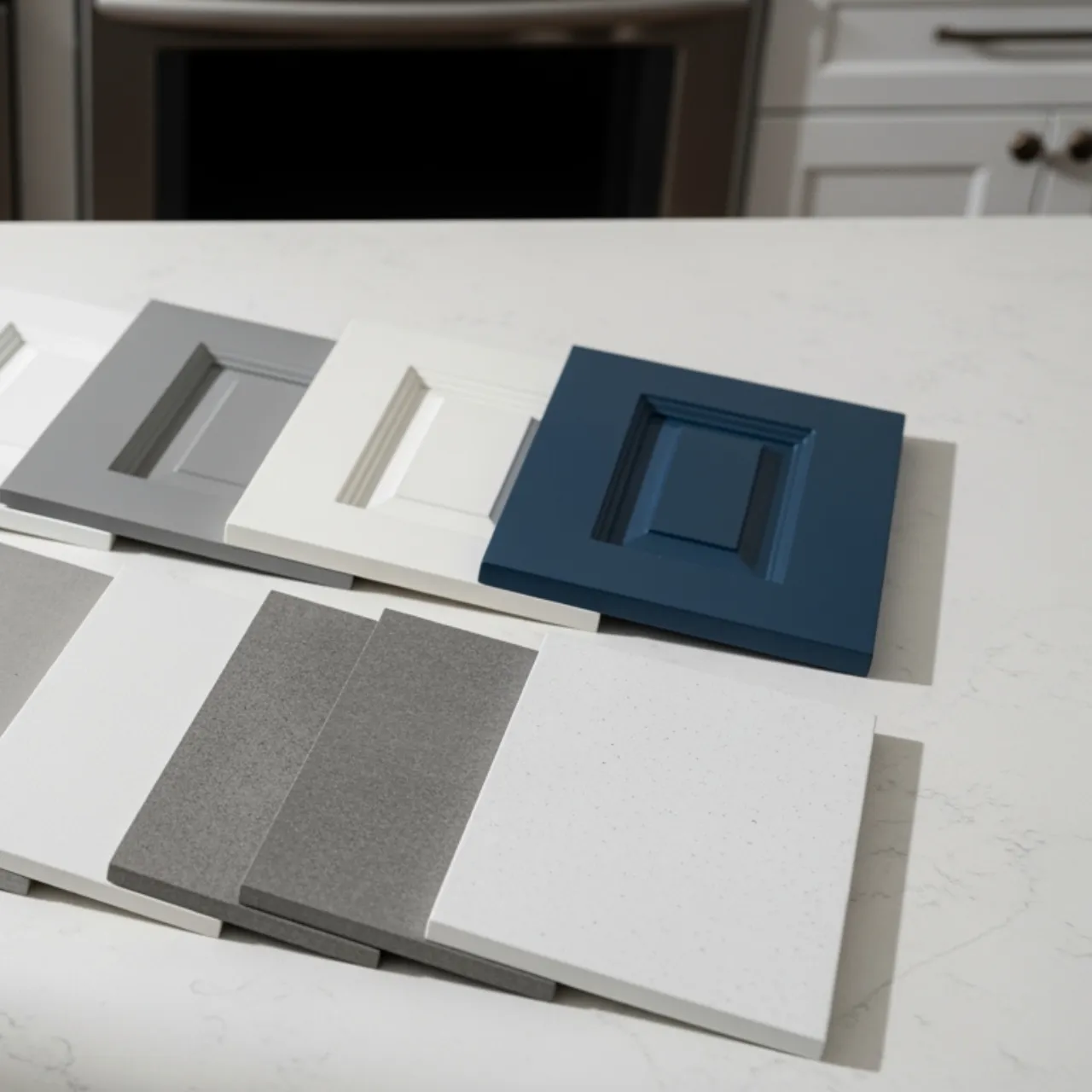
This is true in manufacturing, and it’s just as true in kitchen remodeling. A kitchen cabinet door that looks perfect in the showroom but telegraphs fingerprints, chips at the edges, or shifts with seasonal moisture is not a good material choice, no matter how nice the sample board looked under bright lights.
That’s why practical shop knowledge still matters so much. Fancy renderings don’t cancel physics.
One of the smartest educational ideas making the rounds is a simple shop project: build a hygrometer that demonstrates wood movement.
I love this kind of project because it teaches a lesson that sticks. You can explain seasonal expansion and contraction all day, but watching a wood-based indicator respond to humidity makes the point in a way words usually don’t.
Wood is hygroscopic. It takes in and releases moisture from the air until it reaches equilibrium with its environment. When humidity rises, wood swells. When humidity drops, wood shrinks. That movement is not random. It happens much more across the grain than along the grain, which is why grain direction matters so much in joinery, panel construction, and door design.
A simple wood hygrometer turns that movement into something visible. In broad terms, you use a thin piece of wood, mount it so it can respond to moisture changes, and connect that movement to a pointer or scale. Over time, the device shows the shop getting drier or more humid. It’s part science demo, part shop reminder.
The value is not just novelty. It trains your eye.
Once you really understand wood movement, a lot of common problems stop looking mysterious:
raised panels that bind in winter or summer
face frames that open slightly at joints
doors that twist after installation
veneered parts that behave differently from solid stock
gaps where a top meets a wall
finish issues that seem cosmetic but begin with moisture imbalance
For cabinetry, this matters constantly. A custom kitchen cabinet project lives in a room that sees cooking heat, steam, and repeated humidity swings. A bathroom renovation is even less forgiving. A vanity placed near a shower or tub needs stable construction and sensible material choices, because that room can punish careless design.
Some people still think wood movement is mostly a concern for fine furniture. It isn’t. It’s a daily reality for cabinetry and built-ins.
No one gets excited about acclimation. It feels slow. It delays cutting. It makes people impatient.
Still, measuring moisture content and watching shop humidity is one of the cheapest ways to avoid expensive mistakes.
If you work with lumber, panels, or veneered components, a few habits pay off:
Let material acclimate to the shop before final milling.
Track indoor humidity, not just temperature.
Keep panel products flat and properly supported.
Match construction details to the material’s movement.
Finish all exposed faces when the application calls for it, especially in moisture-prone rooms.
That list is not glamorous. It is useful.
For renovation work, it also helps to think about where the product will live after installation. A kitchen with strong HVAC control behaves differently from a lake house that sits closed for weeks. A powder room is easier on materials than a busy family bathroom. Closet and storage solutions in a conditioned bedroom have different demands from cabinetry in a laundry room.
Same category, different stress.
Veneer sometimes gets discussed like a compromise material. That misses the point.
Done well, veneer is one of the most practical ways to deliver a natural wood look and feel while controlling cost, weight, and raw material use. That is one reason the veneer market remains important, especially for furniture and cabinet production.
Recent market reporting puts the veneer market at a projected $39.9 million by 2035, with furniture manufacturing holding the largest share in 2025 at 41.87%. Those numbers are worth paying attention to, not because forecasts are sacred, but because they reflect something very grounded: demand for wood appearance remains strong, and manufacturers keep looking for ways to deliver it efficiently.
That tracks with what many shops and buyers already know.
Veneer works because it can bridge two competing goals. People want the warmth and variation of real wood. They also want cost control, repeatability, and better material yield. Veneer helps with that on cabinets, wardrobes, tables, modular furniture, and architectural panels.
It also opens up design options. You can get a cleaner grain match across a broad surface. You can apply figured species where solid stock would be impractical or wasteful. You can build larger, more stable parts by combining veneer with an engineered core.
Of course, veneer is not magic. It has its own demands.
Core selection matters. Adhesive selection matters. Press quality matters. Edge treatment matters. Repairability is different from solid wood. And if the job will take abuse, you need to be honest about that instead of assuming every wood-look surface performs the same way.
In a kitchen remodeling project, veneer can be a smart choice for flat slab doors, large decorative panels, and parts where stable appearance matters more than heavy edge wear resistance. In a bathroom vanity, it can work well too, but only if the substrate, finishing schedule, and moisture exposure are considered carefully.
The real lesson is simple: veneer is not second best. It is a specific tool. Use it for what it does well.
Another trend worth watching is the growing role of surface technology in cabinet design.
Recent reporting points to five surface categories leading current panel development and influencing modern cabinet design. Even without listing every category, the bigger point is clear: surface finish is no longer a final decorative decision. It changes performance, maintenance, feel, light reflection, and perceived value.
That shift matters because clients notice surfaces immediately. They touch them. They clean them. They live with them.
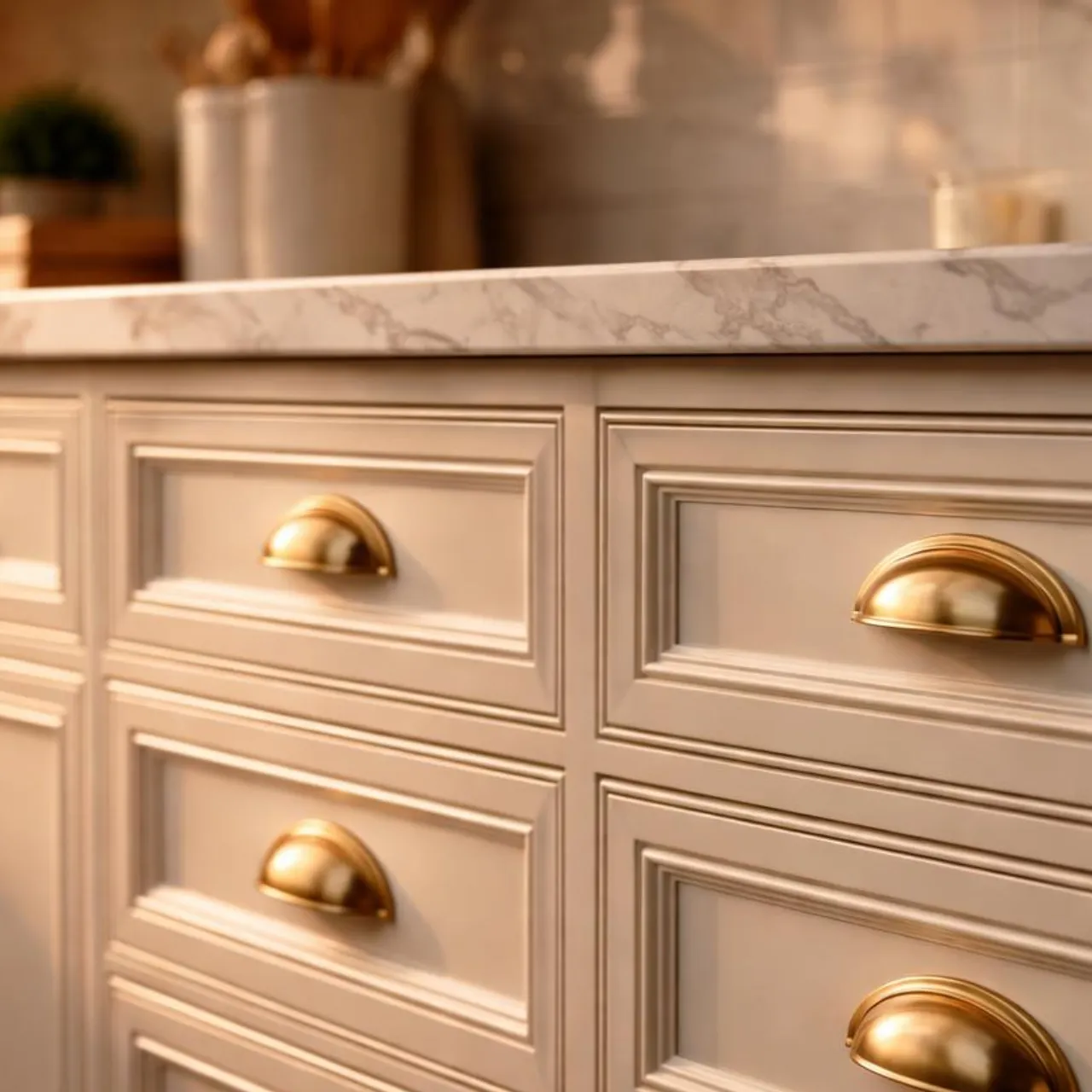
Texture and sheen shape the whole read of a room. A low-sheen surface can make a kitchen cabinet feel calm and understated. A higher-shine finish can bounce light around a smaller room but may show fingerprints faster. Textured surfaces can hide wear and add visual depth, though they may be harder to wipe completely clean. Smooth surfaces feel modern, but every scratch has fewer places to hide.
This is where design and practicality start arguing with each other. Sometimes they get along. Sometimes they don’t.
For example, a luxury design brief may push toward dramatic dark cabinetry with a refined low-gloss finish paired with a pale countertop. It can look great. But in a busy family kitchen, that same finish may reveal oils, dust, or abrasion faster than expected. Meanwhile, a more forgiving textured surface might hold up better in real life, even if it feels less pristine on day one.
The same tension shows up in material pairings. If the countertop is quartz, the surrounding cabinetry may lean toward cleaner, more controlled surface patterns because the slab already carries visual weight. If the countertop is marble, the cabinetry often benefits from restraint, since marble has enough movement and character on its own.
And then there’s the room itself. A bathroom renovation with a floating vanity and reflective wall tile might benefit from a quieter cabinet finish. A mudroom or laundry area might need tougher, easier-clean surfaces more than it needs visual drama.
There’s no universal right answer here. But there is a right question: what will this surface feel like after a year of actual use?
One thing that has changed in the last several years is how directly supply conditions affect design decisions.
That might sound obvious, but I think we still understate it. People often talk about sourcing as if it happens after design. In practice, sourcing is inside design.
If a panel line has long lead times, if a veneer cut is inconsistent, if hardware or component availability shifts, the design itself may need to change. That doesn’t mean quality drops. It means the job needs smarter decisions earlier.
For cabinet shops and specifiers, this often comes down to a few material questions:
Should this part be solid wood, veneer, laminate, or a decorative panel?
Is the selected surface available in enough quantity for the full run?
Will replacement parts be easy to match later?
Are edge details realistic for the chosen material?
Does the finish suit the traffic level and cleaning routine?
These are practical questions, but they shape aesthetics too.
A lot of the best work in cabinetry comes from people who understand that constraints are not the enemy. They just need to be seen early. If you ignore them, the project gets expensive and frustrating. If you work with them, you often get better results.
That’s especially true when chasing affordable quality. I’m a little suspicious of that phrase because it can mean almost anything. But when it means choosing materials honestly, using veneer where it makes sense, reserving premium surfaces for the most visible areas, and matching construction to use, then yes, affordable quality is real.
It’s not about making something cheap. It’s about making smart tradeoffs.
If you’re planning a home renovation or specifying cabinetry for a client, material literacy saves money and headaches.
Here’s where I’d focus first.
Kitchen spaces ask a lot of cabinetry. Heat, grease, repeated opening and closing, spills, cleaning chemicals, and changing humidity all show up here. For a custom kitchen cabinet project, think beyond color and door style. Ask how the material behaves, what the edge construction is, how the surface cleans, and whether the finish will age gracefully beside the chosen countertop.
A quartz countertop often pairs well with both wood veneer and advanced panel surfaces because quartz is consistent and durable. A marble installation asks for a little more care in the whole composition, since both the stone and the cabinetry need to hold up without competing too loudly.
A bathroom renovation is less tolerant of wishful thinking. Steam and splash zones make material selection serious very quickly. A vanity needs stable construction, protected edges, and a finish that can handle daily exposure. Solid wood can work beautifully, but only when movement is accounted for. Veneered or engineered parts may offer better dimensional stability in some designs.
Closet and storage solutions are often where people can use panel products most efficiently. These areas usually have lower moisture stress, which makes them a good place for melamine-faced panels, decorative surfaces, or carefully selected veneer depending on the budget and design intent. This is also where clean organization and durable interiors matter more than dramatic grain.
When the options start piling up, I come back to four filters:
Does it move? Can I get it consistently? Will the surface hold up? Does the cost match the job?
That sounds basic because it is basic. It also cuts through a lot of confusion.
Wood movement explains construction choices. Supply explains schedule risk. Surface performance explains daily satisfaction. Cost explains whether the project remains realistic.
If you keep those four questions in the room, you make better decisions whether you’re building casework in a shop, choosing cabinetry for kitchen remodeling, or deciding between a painted panel and a natural wood veneer face.
The wood and materials conversation is getting more connected, and that’s a good thing.
Shop projects like a wood hygrometer remind us that material behavior is physical, not theoretical. Veneer market data shows that real wood appearance still matters and that furniture demand continues to drive major buying decisions. Surface trend reporting makes it clear that texture and sheen now affect both style and performance in a very direct way.
Put together, those lessons point to one bigger truth: good cabinetry starts long before installation. It starts with understanding what the material is, what it wants to do, and where it makes the most sense.
That may not be the romantic side of woodwork. It is the part that keeps doors fitting, finishes looking clean, and projects feeling well judged years later.